
Photographing the Afterlife of Slavery
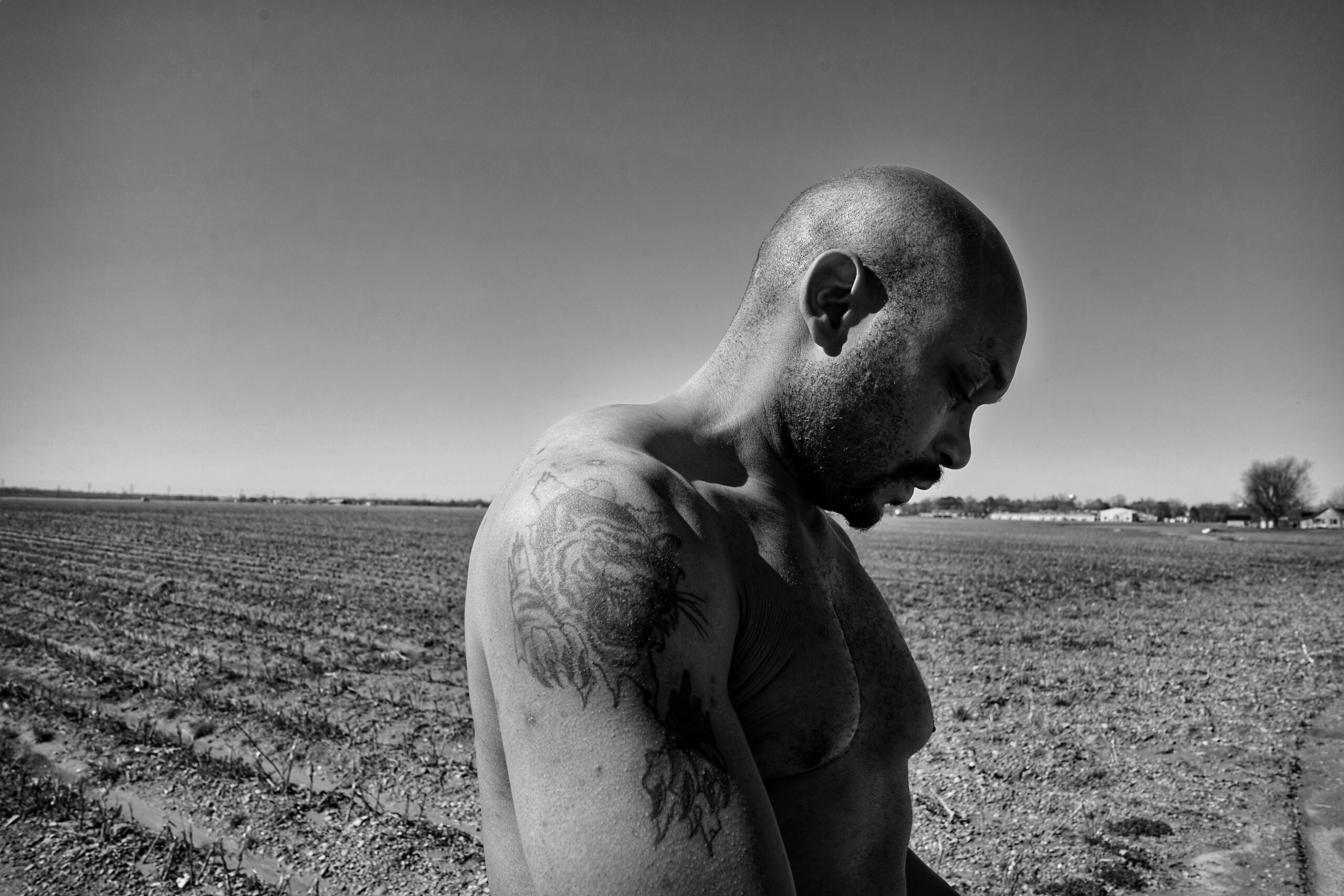
In today’s post, Mickell Carter, an editorial assistant at Global Black Thought (the official journal of AAIHS), interviews Vanessa Charlot about her new article, “In the Shadow of Cotton and Blood: Black Women, Photography, and the Echoes of Slavery,” which examines Black women’s photography as a form of intellectual history, ethical practice, and visual sovereignty through a close analysis of Jeanne Moutoussamy-Ashe’s Daufuskie Islandand the author’s own photographic series Down in the Delta. Grounded in Black feminist theory, Black geographies, and the afterlife of slavery, the work situates photography as a mode of theoretical production rather than a supplementary illustration of historical narratives. Tracing a reverse migratory journey from St. Louis to the Mississippi Delta, the essay reframes the rural South as an epistemic site where memory, labor, and care converge. Drawing on the frameworks of wake work, critical fabulation, and Black feminist visual epistemology, it argues that Black women photographers operate as chroniclers, theorists, and archivists whose images challenge linear temporality and dominant historiographies. Through sustained attention to land, embodiment, and intergenerational continuity, these photographic practices confront archival silences while asserting relational ethics rooted in consent, care, and accountability. By foregrounding photography as a method of historical inquiry and intellectual labor, the essay expands prevailing definitions of Black women’s thought and insists upon the visual as a legitimate and necessary site of knowledge production within Black feminist intellectual traditions.
Vanessa Charlot is an award-winning photographic artist, filmmaker, and Assistant Professor of Media and Communication at the University of Mississippi School of Journalism and New Media. Her work transcends traditional boundaries, blending documentary photography, filmmaking, and interdisciplinary research to explore the complex intersectionality of race, politics, culture, and gender. Charlot’s artistic practice intertwines with the exploration of Black life, compelling viewers to confront and reimagine the often distorted narratives that shape perceptions of Black bodies. Drawing from Saidiya Hartman’s “critical fabulation,” Charlot uses her art to weave together history, memory, and imagination, disrupting conventional notions of objectivity and neutrality in visual storytelling. Her projects are both intimate and politically resonant, serving as acts of reclamation and reframing that aim to restore and recontextualize the histories and legacies of her subjects. Through her lens, Charlot engages in a form of storytelling that challenges boundaries, giving voice to the untold and overlooked.
Mickell Carter (MC): One thing I found particularly fascinating about your article is its methodological and historiographical intervention around the South. You emphasize a return to the South rather than an overemphasis on flight from it during the Great Migration, and you position the South as a space not only of trauma, but also of resilience, continuity, and resistance. Ultimately, you “re-center the South.” Could you elaborate on what you see as the stakes of this methodological and historiographical intervention?
Vanessa Charlot (VC): Re-centering the South means questioning how we have been taught to narrate Black history through movement. The Great Migration remains essential to that history, yet our focus on leaving can obscure the lives of those who stayed, returned, or remained connected to the South long after migration. When departure becomes the dominant story, freedom, possibility, and modernity can seem to exist somewhere beyond the South, leaving the region fixed within narratives of racial violence and historical backwardness. My work is interested in what becomes visible when we complicate that story.
Black people in the South were not just enduring history. They were making lives within it, building intellectual and cultural traditions and developing ways of understanding themselves and the world around them. Such forms of life challenge the tendency to understand Black existence in the South primarily through oppression.
The labor of Black women makes this especially clear. Much of the work they undertook to sustain families and communities has been rendered domestic, private, or simply necessary rather than recognized as intellectual and cultural production.
Knowledge lives within this labor. How do you preserve a family story when the official archive has left you out? How do you remain connected to land marked by both exploitation and belonging? How do you carry memory across generations when the historical record was never made with your life in mind? These are intellectual questions, even when they have not been named as such. Re-centering, for me, means widening the frame rather than replacing one historical narrative with another. The camera becomes one way of attending to what has always been present but has not always been seen.
Returning to the South, then, is not an act of nostalgia or an attempt to recover an idealized past. It is a way of asking what becomes possible when we understand the South not simply as the place Black people were compelled to leave, but as a place of enduring Black intellectual, cultural, and imaginative production.
MC: You describe yourself as a photographer of Haitian descent and connect that diasporic consciousness to your understanding of land, memory, resistance, and the Black Atlantic. How have your experiences and background shaped this project and your approach to photography and research?
VC: My Haitian background shapes how I understand Black history, particularly the relationship between land, memory, violence, and freedom. Haiti makes it difficult to imagine Black history within neat national boundaries. Its history is bound to the larger histories of the Americas: slavery and colonialism, revolution, migration, and Black self-determination. Growing up with an awareness of those connections continues to shape how I approach both scholarship and photography. Diasporic thinking has also shaped how I understand what people carry and what remains bound to place. People carry language, memory, cultural practices, religious traditions, stories, and ways of knowing. Land cannot be carried so easily. It has its own memory. It bears the traces of who worked it, who owned it, who was dispossessed, and who continued to return. I am interested in the tension between movement and attachment, particularly within the Black Atlantic.
The same tension informs how I understand the camera. As a documentary photographer, I am conscious of the authority a photograph appears to possess. We look at an image and often assume we are looking at truth. Yet a photograph is never the whole story. It is an encounter shaped by a particular person, place, position, and moment. Something always exists beyond the frame. Often, the unseen is where my attention begins. Photography and scholarship meet in this space. I do not experience them as separate practices, but as different ways of asking questions. Photography allows me to remain with a person, place, object, or landscape and attend to what may not emerge through conventional research. Scholarship provides a language for considering what those encounters mean historically and politically. Each practice complicates the other.
Being Haitian also gives me a particular way of seeing the South. The Mississippi Delta, for example, does not appear to me as an isolated American region, but as part of a larger Black Atlantic history shaped by slavery, labor, migration, resistance, land, and the question of who has the right to belong to a place.
The histories of the Caribbean and the American South are not the same, and I do not want to collapse their differences. Still, resonances emerge when we attend to the movement of people, memory, and culture across the Atlantic.
A diasporic perspective has also made me attentive to how Black people have been seen. Much of the visual record of Black life was produced through institutions and gazes that were rarely concerned with Black interiority. Black people were too often photographed as evidence of a condition rather than as people with complicated inner lives, histories, desires, and relationships to place. My work begins with the question of what becomes possible when we look beyond the conditions imposed upon Black life and attend instead to the fullness of Black experience.
MC: You describe the Mississippi Delta as “a living epistemic site; a geographic text demanding interpretation attuned to the afterlife of captivity.” Could you elaborate on this? What can space and landscapes reveal about Black life and knowledge production?
VC: When I describe the Mississippi Delta as a living epistemic site, I am asking us to see the land as more than the backdrop to history. The land holds history. It bears the marks of slavery–plantation agriculture, segregation, dispossession, migration, environmental change, and Black resistance–but these histories do not remain neatly in the past. They overlap and continue to shape what can be known about the Delta and the people who live there. You can see this in the landscape itself: fields made wealthy by Black labor beside communities marked by generations of disinvestment; churches, cemeteries, homes, roads, and abandoned buildings carrying histories that may never appear in an archive. The land remembers, but its memory is not always legible.
In this sense, the Delta embodies what I understand as the afterlife of captivity. I am not suggesting that slavery persists unchanged. I am interested in how the structures it produced continue to shape land, labor, wealth, mobility, and belonging. But I also resist reducing the Delta to a geography of racial violence. That framing leaves too little room for Black life beyond injury. The Delta is also a place of knowledge, creativity, intimacy, and continuity. Black communities have produced ways of knowing through their relationships to land and to one another, carried through religion, music, foodways, oral histories, family stories, material culture, and the ordinary practices of care.
Photography gives me a way to stay with those contradictions. I can photograph a landscape, but the photograph does not tell me what I am seeing. I have to ask: What remains visible? What has been erased? What has been made to disappear? And what becomes visible only through the stories of those who know the place? That is what I mean by calling the Delta an epistemic site. It asks us to reconsider where knowledge lives. It lives in archives and books but also in land, memory, bodies, oral histories, and lived experience. My photography brings those forms of knowledge into conversation, not to produce a single truth, but to make room for what the archive alone cannot hold.
MC: You argue that photography can function as a form of intellectual work, rather than simply a way of documenting the past. How does looking at Black women’s photography this way change how we think about intellectual history?
VC: I think we need to reconsider what we mean when we call someone an intellectual and what kinds of work we are willing to recognize as intellectual. Intellectual history has traditionally privileged certain forms of production: books, essays, speeches, letters, and institutional records. These forms matter, but they have never been the only places where people think, theorize, remember, or make meaning. Black women, in particular, have long thought through images, storytelling, family and community practices, organizing, and the preservation of histories that institutions often failed to collect.
This matters to me because we can encounter a photograph and immediately ask what it documents, rather than asking what kind of thinking takes place within it. A photograph is not simply a record of what happened. Someone chose where to stand, what to include, what to leave beyond the frame, when to make the image, and how to represent the person or place before the camera. These are intellectual decisions. They reveal a way of seeing and understanding the world.
I am interested in what changes when we begin with the photographer’s knowledge instead. What does she know about the person she photographs? What does she understand about the place? What does she choose to reveal, and what does she know should remain beyond the frame? What histories does she carry into the making of the image? These questions shift the photograph from an object we interpret into an act of interpretation itself.
The distinction is central to my own practice. As a Black woman and documentary photographer, I am conscious of the relationship between the person holding the camera and the person before it. The camera does not give me uncomplicated access to another person’s life. If anything, it should make me more attentive to what I cannot know. Photography can create intimacy while also revealing its limits. Something always remains beyond the frame, and recognizing that remainder can be an ethical practice.
Photography and scholarship meet here. I am interested in photographs as sites where history, memory, power, and imagination converge. When I look at the work of Black women photographers, I am not only asking what their photographs tell us about a particular period. I am asking what those images reveal about how they understood the historical moment in which they lived. Black women photographers have made archives, sometimes deliberately and sometimes simply by documenting the lives that mattered to them. They have preserved family histories, recorded communities, challenged stereotypes, represented Black interiority, and offered ways of seeing absent from official records. This is both historical work and intellectual work.
Copyright © AAIHS. May not be reprinted without permission.