
Race-Making Across Borders: How Sudan Challenges the Study of Race
This post is part of our online roundtable on Christopher Tounsel’s Bounds of Blackness.
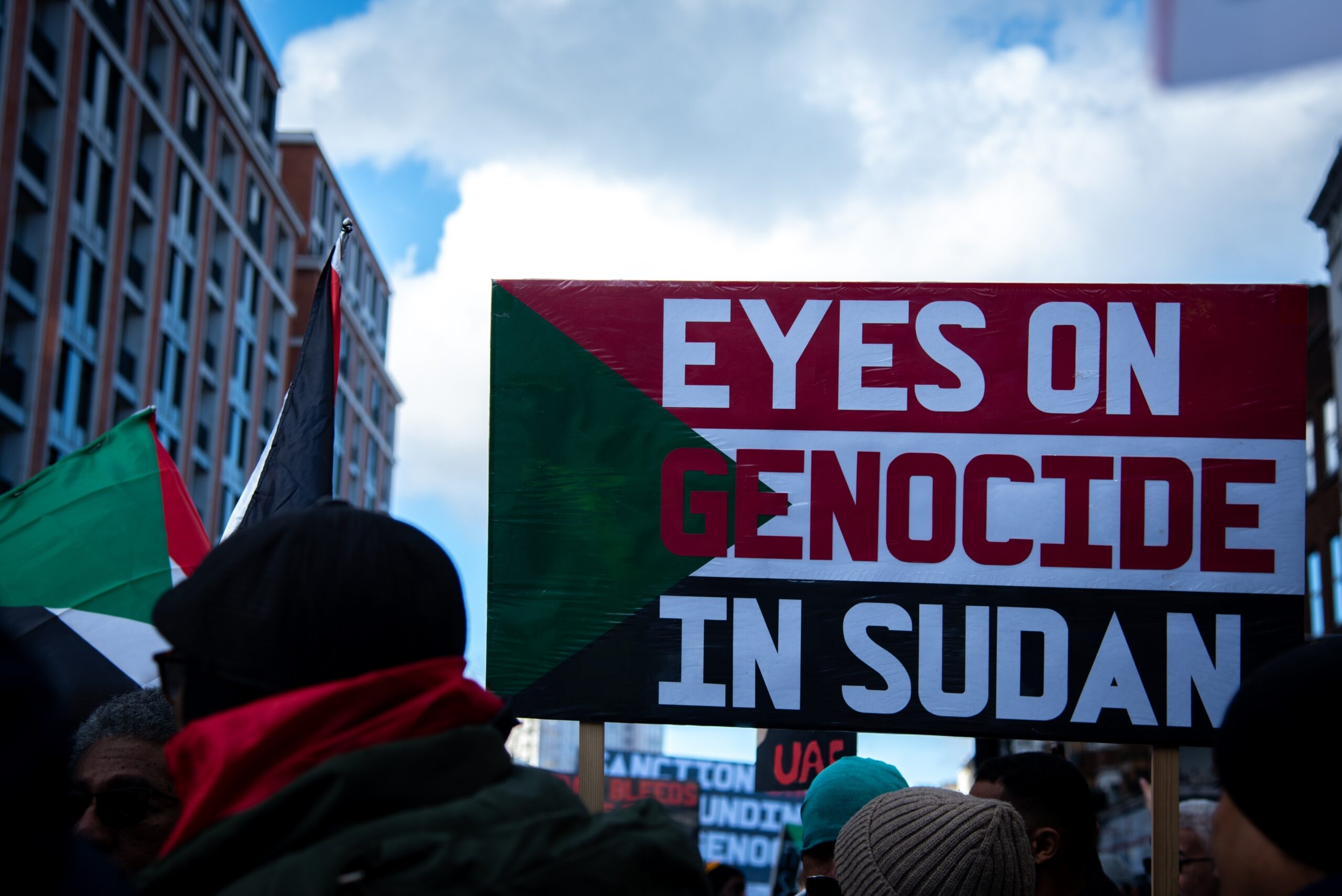
What defines Blackness, and who gets to decide? In Bounds of Blackness: African Americans, Sudan, and the Politics of Solidarity, Christopher Tounsel tackles these complex questions with historical depth and nuance, turning to Sudan as a site where African American racial and political imaginings were placed in uneasy tension with Sudanese geopolitical realities. Tracing African American engagements with Sudan across the twentieth century—from colonial-era cotton education to Obama-era negotiations for South Sudanese independence—Tounsel reveals how African Americans alternately embraced Sudan as a site of diasporic kinship, Black Islamic sovereignty, and anti-Black violence. In doing so, he underscores the elasticity of Blackness as an intellectual construct while exposing the limits of political solidarity rooted in racialized belonging.
With his focus on Sudan, a country he describes as “both Arab and not,” Tounsel significantly broadens our understanding of African American engagement with Africa (9). While foundational scholarship has explored African American connections to Africa, particularly regarding decolonization and Cold War geopolitics, this work has primarily focused on transatlantic histories of slavery and European colonization within a white-Black racial binary.1 Alternatively, Tounsel offers a compelling case study in which Blackness, Arabness, and Islam intersect to deepen our appreciation for how African Americans drew upon particular histories and ideological commitments to forge connections to Sudan.
By illuminating their competing visions of Sudan, Tounsel invites us to consider how African Americans’ racialization of Sudan reshaped how they understood their own Blackness.
The racial reimaging of Northern Sudan provides an instructive illustration. When African American newspapers revoked the Blackness of Northern Sudanese and reconstituted them as “Arabs,” it was not because of perceived changes in their physical appearance. Instead, by serving as oppressors to their southern counterparts, the Northern Sudanese operated in ways antithetical to African American understandings of Blackness (115-116). To preserve a coherent vision of Blackness rooted in racialized oppression, Northern Sudanese were expelled from the category of Blackness altogether.
Though politically expedient, this configuration of Blackness revealed a troubling realization. When Blackness was too tightly linked to a particular register of oppression, it became difficult to imagine Black people as wielders of power, let alone as perpetrators of harm. Such a framework implicitly cast whiteness and Arabness as synonymous with domination while Blackness was synonymous with suffering, leaving little room for the complexities of Black political agency, including complicity in imperial or oppressive systems. Chapter Five, which covers the Nation of Islam’s (NOI) engagement with Sudan during the Second Sudanese Civil War (1983-2005), powerfully illustrates the moral and political costs of defining Blackness solely through marginalization.
Against the backdrop of the Arab-Israeli conflict, leading figures within the NOI mobilized racial and religious solidarity in their defense of the Sudanese government, even as the government’s role in the enslavement and genocide of Sudan’s non-Arab population became more evident. Though the NOI’s support was influenced by complex geopolitical concerns that extended beyond racial and religious solidarity, namely protecting Sudanese sovereignty against Western anti-Arab hostility, their decision to center Islam within their racialized vision of Pan-African unity effectively excluded the Black Sudanese victimized under the Bashir regime (131). As Tounsel ably illustrates, racial and political essentialism, however well-intentioned, ultimately flattens the diversity of global Black identities and imperils our ability to analyze power, responsibility, and ethics within Black communities.
Though Tounsel attends to social rather than biological constructions of race, many of his historical actors relied heavily on phenotype and visual resemblance when articulating solidarity with Sudan. Their reliance on skin color and other physical “markers” of Blackness underscored how race-making remained deeply tied to embodiment and visuality, even in moments where race was understood as socially constructed. During her 1936 tour of central Africa, which included a stop in Sudan, Eslanda Goode Robeson and her son played their own racialized version of “I Spy,” matching the features of continental Africans to African Americans back home (50). Writing for the Pittsburgh Courier in 1947, J. A. Rogers, similarly invoked visual resemblance when describing Sudan’s Arab and non-Arab population as “‘more Negroid than the people in any American Negro district’” (53). And finally, writing in the NOI’s Final Call over sixty years later, Askia Muhammad justified his support for Sudan’s President Omar al-Bashir while describing him as a “‘brown-skinned president who would be considered ‘Black’ in the U.S.” (132). In each example, physical features served as justification for asserting racial solidarity, thus underscoring how visual perception continued to inform the construction of racial identity and belonging.
Yet racial belonging was never determined solely by physical features. Political behavior could override or reshape phenotypic legibility. During Sudan’s colonial era, the Chicago Defender referred to all Sudanese as “‘African blacks’” when contrasting them against “‘the tan colored Egyptians, who . . . regard themselves as Caucasian’” (60). After Sudanese independence, Black newspapers increasingly characterized North Sudan as a population of “‘Arabs . . . engaged in a silent war against black Africans’” of South Sudan (107). In drawing attention to this discursive shift, Tounsel highlights how African Americans identified and negotiated racial solidarities by positioning themselves against both whiteness and Arabness.
While Tounsel forces readers to confront the limits of diasporic connection premised on phenotypic resemblance or shared oppression, his intervention is especially urgent because he attends to the exclusions and erasures that emerge when race is treated as universally legible or politically unifying. Even as he demonstrates the importance of racialization within African American solidarity projects, Tounsel appears skeptical that Blackness can traverse divergent historical, regional, and cultural contexts while maintaining coherence as a shared racial register. Neither stable nor transhistorical, Tounsel frames Blackness as an imagined identity continuously redefined through political exigencies and ideological commitments.
Ultimately, Bounds of Blackness attends to the global, relational, and plural meanings of Blackness. In doing so, Tounsel broadens both African diasporic studies and the scholarship on race-making by advancing an understanding of Blackness that is geographically situated and historically contingent rather than singularly grounded in the transatlantic experience.2 By pushing for a more capacious approach to the study of race, identity, and solidarity, Tounsel reminds us that the most meaningful solidarity emerges not from assumed familiarity and fixedness but from honest reckoning with difference and power.
*This essay appears in Vol. 3, Issue 1 (Spring 2027) of Global Black Thought. Copyright © 2026 AAIHS.
- For emblematic work in this vein see: Penny von Eschen, Race Against Empire: African American and Anticolonialism,1937-1957 (Cornell University Press, 1997); Alvin Tillery, Between Homeland and Motherland: Africa, U.S. Foreign Policy, and Black Leadership in America (Cornell University Press, 2011); and Kevin Gaines, African Americans in Ghana: Black Expatriates in the Civil Rights Era (UNC Press, 2012). ↩
- Denise Ferreira da Silva, Toward A Global Idea of Race (University of Minnesota Press, 2007); Paul Tiyambe Zaleza, “African Diaporas: Toward a Global History,” African Studies Review 53, no.1 (2010): 1-19; and Michelle M. Wright, Physics of Blackness: Beyond the Middle Passage Epistemology (University of Minnesota Press, 2015). ↩
