
Black Women’s Rights and Leadership: An Interview with Carole Boyce Davies
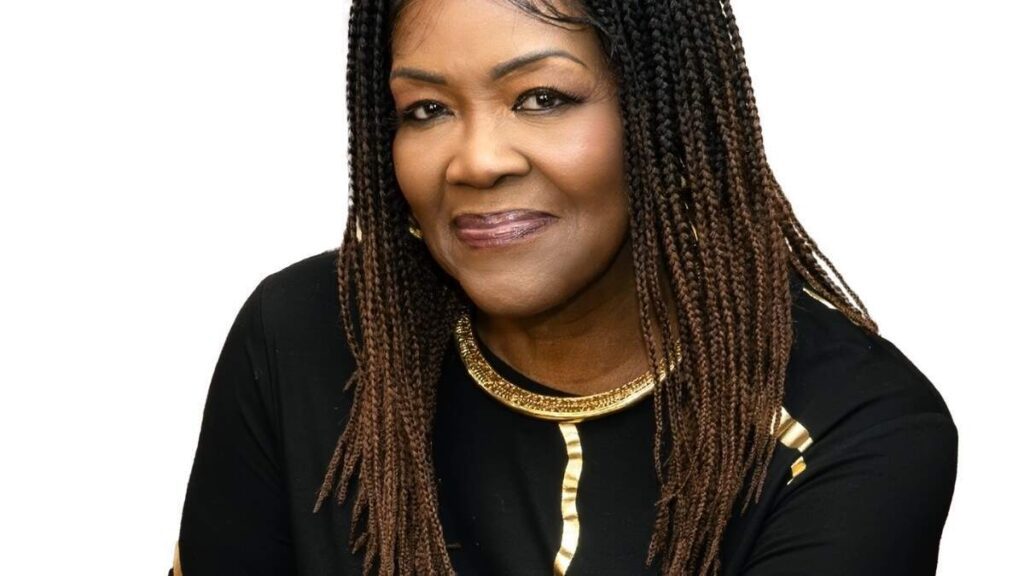
In today’s post, editors of Global Black Thought interview Carole Boyce Davies about her research and writing on Black feminist theory, transnational intellectual traditions, and Black women’s leadership. Boyce Davies is the Eric Eustace Williams Endowed Chair in Caribbean Studies and chair of the Department of English at Howard University. An internationally recognized scholar of Black women’s writing, Caribbean Studies, and the African diaspora, she previously held the Frank H. T. Rhodes Professorship of Humane Letters at Cornell University. Her books include Black Women, Writing and Identity: Migrations of the Subject (1994), Caribbean Spaces: Escape Routes from Twilight Zones (2013), Left of Karl Marx: The Political Life of Black Communist Claudia Jones (2007), and Black Women’s Rights: Leadership and the Circularities of Power (2022). Her scholarship examines Black women’s intellectual and political contributions across the Caribbean and the African diaspora, with particular attention to the intersections of gender, race, colonialism, and liberation.
Global Black Thought (GBT): What drew you to the study of Black life and to the study of Black women’s politics?
Carole Boyce Davies (CBD): In my case, it was not so much being drawn to this area of study, but that these fields were open to my generation of scholars, allowing us to advance from undergraduate work to a Ph.D. Before then, many professors in these fields would have M.A. degrees for most of their lives, only going back to acquire a Ph.D. after they were already well-established faculty members once the opportunities were provided. I know this from observing many of the talented and experienced professors who trained me such as Mary Fair Burks, one of my most endearing undergraduate professors.
By the time I arrived in the United States at an HBCU, where my brother was on the faculty and facilitated my entry, we were on the threshold of the 1970s and the opening for Black youth to get into major predominantly white universities (PWIs). As a result, these students demanded PWIs like Cornell University create formal Black Studies units to accompany their journeys. This is “when and where I enter” as Anna J. Cooper called it and as Paula Giddings titled her book with the relevant subtitle of The Impact of Black Women on Race and Sex in America (1984). Interestingly, while I was a graduate student at Howard University in the 1970s, Paula Giddings was on campus working with the Howard University Press and historian Evelyn Brooks Higginbotham was a young graduate student who sometimes visited classes in the Theory and Methods of African Studies course being taught by Director Chike Onwuachi. I address some of this in a chapter in my collection of reflective essays Caribbean Spaces (2013).
A pattern emerges from these encounters that “drew me in” as the conjunction of Black intellectual projects advanced formally within the university system. The following rise of Black Women’s Studies in the 1980s, made most explicit in But Some of Us Are Brave (1984), provides another conjunction. A third and similar stream must be accounted for in people like me, born in the Caribbean and now studying in the United States. We had come out of the immediate decolonial/independence leadership, via scholar-leaders like Eric Williams of Capitalism and Slavery (1944), then also prime minister of Trinidad and Tobago and previously having been a professor at Howard University. Williams viewed the institution as an important scholarly pathway for Caribbean youth and saw Howard as perhaps a more significant destination than Harvard, that provided a certain kind of community knowledge that served as an important backdrop. So let me say deliberately, and in summary, that I am a beneficiary of at least three streams of Black intellectual messages about knowledge and our role in its advancement. I am using this genealogical approach on purpose here as, for me, it is important always to see ourselves in history and recognize that our accomplishments were not achieved only by self-will.
GBT: How have you seen Black Feminist theory change since your earliest engagement with it? Are there any recent trends you’re most excited about?
CBD: The transnational dimensions would be the most obvious change or, perhaps, extension. Early and tentative discussions of whether there was an African feminism or not, which we highlighted in our introduction to Ngambika: Studies of Women in African Literature (1986), were advanced formally first by Filomena Steady in The Black Woman Cross-Culturally (1981) and embraced by Rosalind Terborg-Penn and Andrea Benton Rushing in one of the early conferences on the subject at Howard University, which I attended and there learned about this potential framing and its product, Women in Africa and the African Diaspora: A Reader (1989). In those days, as perhaps the first major generation of scholars studying Black women’s writings in the academy, the development of the field grew through conference presentations, with papers subsequently collected into academic critical anthologies and collections. Few presses were interested in these works and often explicitly indicated that there was not enough of an audience to support publishing initiatives in these new areas.
In my own experience, as I recounted in a recognition of Kassahun Checole of Africa World Press at the African Studies Meeting in San Francisco (2023), the major academic presses that now have series on these topics did not see studies that examined women’s writing, for example, as valuable. I personally sent out about 27 letters to presses to get an interest in publishing the first collection of studies of women in African literature. Most responded that it was a good project, but there was no interest in publishing it or no market then for such works. Thus, we literally had to create the supportive apparatus via teaching and conference presentations. Even then, the body of published literature by African writers was assumed to be male only.
The process of studying Black women’s writing began to happen in several ways as evidenced by several anthologies that came out in the 1980s in the United States. Along with the publication of these critical anthologies, writers like Ama Ata Aidoo (1942–2023) of Ghana were explicit in claiming that a feminist position was as ideologically valid as African scholars claiming Marxism as an analytical tool. A parallel body of African feminist criticism developed.
A similar process can be identified as well in Caribbean literature with another collection that I was involved in, Out of the Kumbla: Caribbean Women and Literature (1990), which had the good foresight of including a portion of Sylvia Wynter’s “Beyond Miranda’s Meanings: Un/silencing the ‘Demonic Ground’ of Caliban’s Woman” as an afterword. Recently, my coeditor and I were pleased to publish the full 126 pages of this essay as part of a 30th anniversary collection titled Beyond the Kumbla: Sylvia Wynter and Continuing Conversations (2026). Still, in that period, it was not unusual to be challenged by male scholars that we did not have any theory. What was clearly happening, I see in retrospect, was precisely the development of Black Feminist Theory in its various formations.
I suppose in my own formations, I was aided by Barbara Christian’s documentation of this process in her classic essay “The Race for Theory” (1985), which critiqued the assumption that theory had to appear in a certain form, a certain language, and in certain Euro-American geographies and scholarly approaches, and that Black scholars had to also find a way to re-articulate these. For Christian, theory appeared in various creative formations as well. Thus, it is interesting to retrace a trajectory in which one began to see the rise in scholarship from the essays in Toni Cade’s The Black Woman (1972) in the United States to Black Feminist Theories: Transnational Perspectives (2026), a collection that I was invited to edit. Instead, I recruited a transnational group of scholars to collaboratively do the kind of work that examines this field in its fuller transnational contexts. In this collection, we present an eclectic body of materials that includes Black feminist manifestoes and statements; selections from poetry and reprinted essays, extended critical regional analyses, and longer academic essays on sexuality, body, aesthetic creativity, and Black feminist futurity.
GBT: Your latest book, Black Women’s Rights: Leadership and the Circularities of Power, captures the depth and diversity of Black women’s leadership practices across time and space. Tell us more about this study and how it deepens our understanding of Black women’s intellectual and leadership contributions.
CBD: My book, Black Women’s Rights: Leadership and the Circularities of Power (2022), includes an appendix that features a selection of my interviews with women leaders who I first asked to share their “leadership stories.” I recently designed and offered a course at Howard University titled Black Women’s Leadership Stories (Spring 2026) that has started to do something similar and added a component of creating a children’s story on a chosen leader with amazing results, including one on Jasmine Crockett. The products of these students’ work will shape these fields as they progress through their professional lives.
In the research for my book, I was pleased to realize that the issue of Black women’s rights had already been raised in the United States and Caribbean at the turn of the last century. Jamaican Catherine McKenzie had written an essay in 1901 titled “The Rights of Women,” which she said needed to “be discussed . . . settled . . . and developed into full maturity during the century upon which the world has just entered.” Pursuing this further in history, using the language of “rights” as the research theme, I recognized the important intervention that came from Sojourner Truth, who had made several similar claims including her famous “I Am a Woman’s Rights” speech that has been more famously remembered as the stereotyped “Ain’t I a Woman.”
My argument then became that as W. E. B. Du Bois articulated a discourse on race in his famous color line statement at the first Pan African conference in London in 1900, Black women had been asserting their rights in the same period and indeed before. Relatedly, Anna Julia Cooper (1859–1964) had also attended that conference and earlier had published her book, A Voice From the South (1892), which emphasized what would be defined as intersectionality today by noting that Black women faced both a “woman question and a race problem.”
While feminism as an ideology and political practice would dominate the landscape in its descriptions of what women were asserting, there was consistently a parallel assertion of Black women’s rights. My book aimed to put that topic back into intellectual and political discussion as it examined the various ways that basic human rights have been denied to Black women historically, and their parallel need to assert them.
In this context, leadership in its various forms is one of those rights as Black women continue to find ways to articulate how our communities are going to succeed. And we have organized our communities consistently within, outside, and in spite of the macro political structures that govern our lives.
*This is an excerpt of an interview that appears in Vol. 2, Issue 2 of Global Black Thought. Copyright © 2026 AAIHS.
Copyright © AAIHS. May not be reprinted without permission.