
Black Ivy in the Classroom: How Black Teachers Used Style as Pedagogy
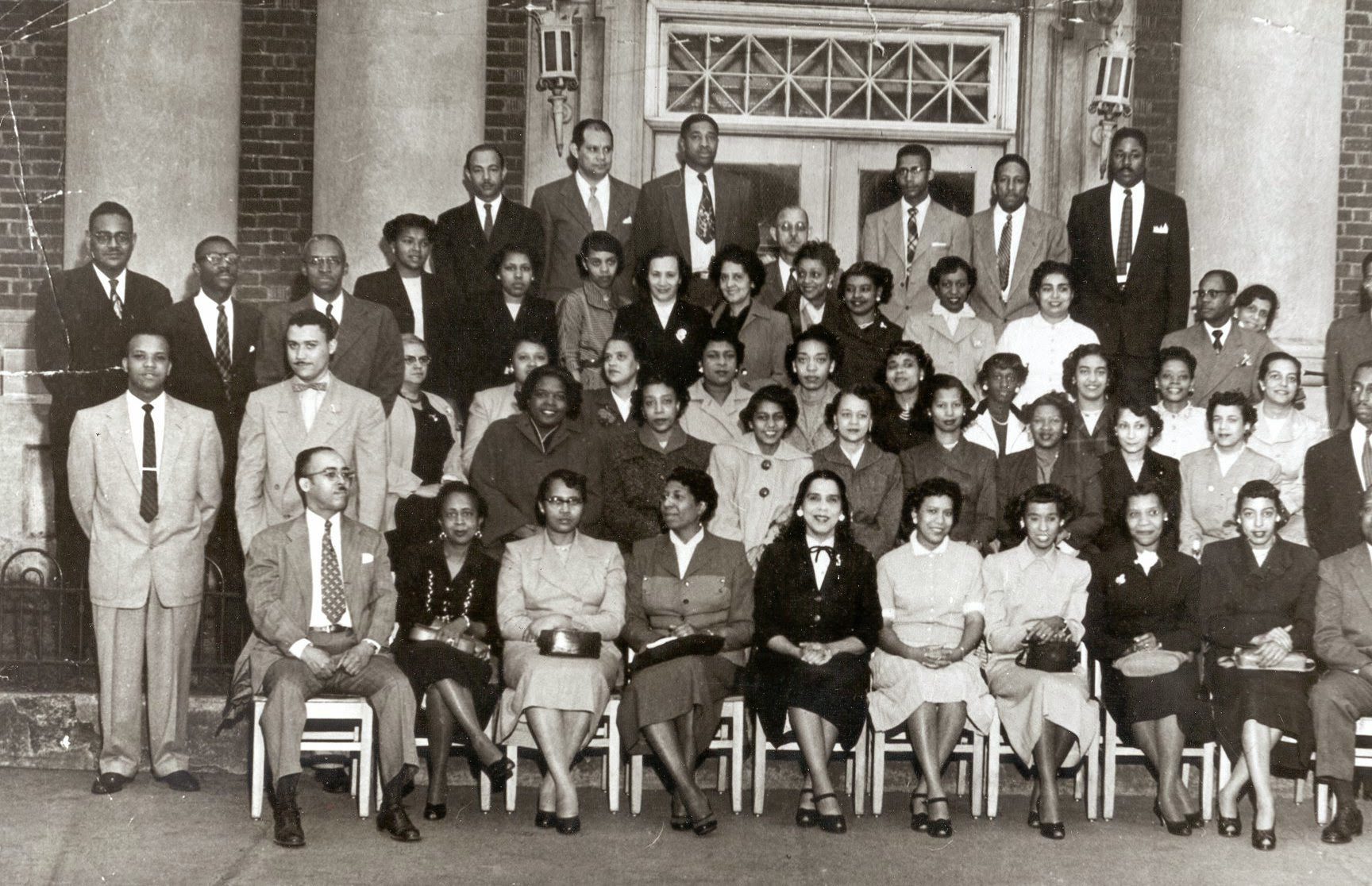
Growing up in the 1970s and 1980s, I viewed Black teachers as icons of fashion and style. Mr. Willie Cain, a high school teacher and principal, always wore a starched white shirt and tie, smoked a pipe, and carried a briefcase. Ms. Atchison, my third-grade teacher, wore fashionable, neatly pressed dresses and cat-eyeglasses. My own mother, a first-grade teacher, dressed rather conservatively but always with great style.
For me, my teachers were the epitome of cool and intellect. The teachers of my childhood had also taught in the 1950s and 1960s, and their style endured into the 1970s. Images of such Black teachers are readily available in yearbooks of segregated Black schools from the 1960s and earlier. Decades later, I again witnessed the style of Black teachers in my research on Black teachers’ pedagogy during the civil rights era.
In 2014, a team of students and I established the Teachers in the Movement oral history project to study the pedagogy and lives of Black teachers who taught between 1950 and 1980. Our objective was to explore what, how, and why Black teachers taught during the civil rights era and whether their teaching reflected the ideals of freedom, democracy, and equality central to the movement. In preparing for the interviews, we examined yearbooks of segregated schools and noticed that men teachers often dressed in a shirt and tie and sometimes a sports jacket, and women teachers sometimes dressed in stylish dresses and heels and occasionally wore pearls.1
The teachers who participated in our project confirmed that Black teachers often dressed the way we saw them portrayed in the yearbooks. They recalled that “back in the day,” teachers projected a sense of style and dignity. They informed us that they loved to dress nicely, project professionalism, and set high standards for their students. Community members and former students, whom we interviewed, often concurred, noting the great respect they had for their teachers.
Black educators and Black people in general have a long history of dressing well, regardless of class, that is tied to both respectability and appreciation of sartorial style.
In Righteous Discontent: The Women’s Movement in the Black Baptist Church, 1880-1920, historian Evelyn Brooks Higginbotham describes a “politics of respectability” that “equated public behavior with individual self-respect and with the advancement of African Americans as a group.” In Beyond Respectability: The Intellectual Thought of Race Women, Brittney C. Cooper further explicates the notion of respectability, noting the challenges Black women encountered within the context of Black male patriarchy in the early to mid-twentieth century. The outstanding work of these historians helped me understand Black teachers’ desire to project respectability. My conversations with Black teachers over the past decade have helped me recognize that Black teachers also dressed stylishly because they enjoyed the aesthetics of fashion and wanted to telegraph the professionalism of teaching to the Black community.
The history of Black people dressing well has been part of the quest for civil rights and social justice dating back to the early twentieth century and even earlier. Black stylish dressing continued well into the twentieth century, with positive media exposure in the 1960s civil rights era. Footage from the movement often reveals men dressed in suits and women in dresses and sometimes even heels, which conveyed a sense of dignity and respect and a mode of pedagogical activism. It should also be noted that not all civil rights activists adhered to the Black Ivy aesthetic and that some of the younger activists resisted the style in favor of denim, identifying themselves with the working class. Later, the Black Panthers adopted black clothing, which included turtlenecks and berets conveying a more radical form of resistance than mid-1960s activists. The teachers of the 1960s, in our work, appear to have adopted a more collegial style called “Black Ivy.”
In Black Ivy: A Revolt in Style, written by Jason Jules and art directed by Graham Marsh, Jules identified Black Ivy as an Ivy League collegiate style that included polo shirts, blazers, and loafers. I would add fashionable spectacles and sweaters to that repertoire. As Jules noted, “Black Ivy was a kind of battledress, a symbolic armour worn in the nonviolent pursuit of fundamental change.” Black Ivy also represented progressive politics, artistry, and music that displayed the sartorial style of Miles Davis, Nina Simone, John Coltrane, Diahann Carroll, Lorraine Hansberry, James Baldwin, Quincy Jones, and civil rights icons and activists Diane Nash, Mary Frances Early, Hamilton Holmes, Charlayne Hunter-Gault, Martin Luther King, Jr., Coretta Scott King, and Malcolm X. I am offering a somewhat expanded perspective of Black Ivy, which includes Black teachers who demonstrated an understated style, elegance, and intellectual persona that inspired Black youth.
As we learned from our interviews, Black Ivy was part and parcel of teachers’ pedagogical activism. For instance, educator LaVerne Spurlock highlighted the relationship between style and pedagogy and its influence on her as a teacher. She stated, “I know the reason I am in these flat shoes today is because I walked around in high heels like Mary Jane Wingfield Payne had done, like Mrs. Bettis had done, like Mrs. Gadsden had done—but particularly Mrs. Payne.”2 She noted that Mrs. Payne walked up and down the aisle of her classroom in high heels, engaging her students and always stayed in close proximity to them. Mrs. Payne’s style commanded respect; it was integral to her pedagogy and would influence Mrs. Spurlock’s own teaching and work as a school counselor. During our interviews with Mrs. Spurlock, it was not lost on us that she was exquisitely dressed, despite being in her 80s at the time.
I also recall an interview my team and I conducted with educator Walter Banks White in my hometown of Rock Hill, SC. Upon entering the York County Library where the interview took place, I immediately noticed Mr. White’s debonair attire: a tan-colored suit, crisp white shirt, bow tie, and freshly polished brown dress shoes. Mr. White’s daughter noted that her father took great pride in his dress and had always liked to dress well.
Black Ivy for Black teachers was certainly about respectability, but it was equally about Black people’s desire to dress nicely. It conveyed the professionalism of their work as teachers and reinforced to the community that Black people had always had a tradition of dressing well, often regardless of their class standing. The Black Ivy style of Mr. Cain and other teachers, many of whom had also taught in the 1960s, influenced me and other Black teachers I knew while teaching in the early 1990s. I vividly recall appropriating their style, wearing neatly pressed polo shirts, khakis, and occasionally suits while teaching middle and high school. I thoroughly enjoyed dressing that way and the students and staff often complimented my Black Ivy style as well. I remember individuals in the community jokingly observing that I must be a teacher or a preacher, reinforcing the respect Black communities have historically had for these two professions.
As we continue to learn about Black teachers of the civil rights era, it is valuable to understand their style of dress as a tool in their pedagogical toolbox, which they used to mentor a new generation that would encounter a more expansive, but also more challenging, America in the decades that followed.
- See, for example, G. W. Carver High School (Pinetops, N.C.), The Eagle, 1964 (Pinetops, NC: Edgecombe County Memorial Library, 1964), Internet Archive ID eagle19641964gwca, accessed September 9, 2026. ↩
- LaVerne Spurlock, interview by Carmen Foster, video recording, Richmond, Virginia, December 5, 2016. Teachers in the Movement Institute Collection. ↩
