
From Abolitionist to Race Woman: Charlotte Forten’s Black Feminist Legacy
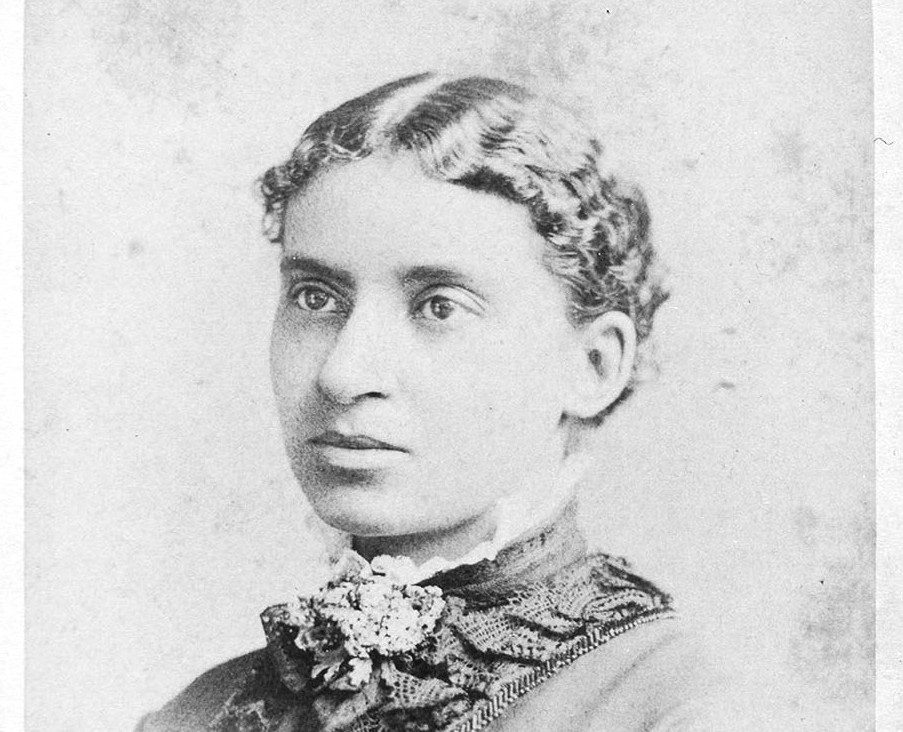
In today’s post, Mickell Carter, an editorial assistant at Global Black Thought (the official journal of AAIHS), interviews Jaimie D. Crumley about her article, “‘And Then Forget’: Charlotte (“Lottie”) Forten and the Nineteenth-Century Black Feminist Project to be Remembered,” which examines how Antebellum Black abolitionist women were proto-race women. They were moral leaders of the biracial abolitionist cause. They were productive writers and helped form mutual aid and anti-slavery societies. However, their contemporaries often overlooked them and their contributions to abolitionism. Freeborn author, activist, and educator Charlotte L. Forten (1837–1914) was a proto-race woman. She served as a personal, intellectual, and relational bridge between antebellum abolitionist women and the race women born during and after the Civil War era. This article situates Forten within the historiography of nineteenth-century race women whose private, semi-private, and public writings, activist pedagogy, and relationship-building demanded that Black women and their ideas be remembered.
Jaimie D. Crumley is an Assistant Professor in the Department of Ethnic, Gender, and Disability Studies. During the 2022-23 academic year, she was the Old North Illuminated in Boston, Massachusetts. She serves as the area editor of the “Race, Ethnicity, and Cultural Identity” section of the Oxford Research Encyclopedia of Gender and Women’s History. Dr. Crumley is a public historian who has extensively researched the lives and histories of African and Indigenous peoples in colonial and antebellum New England. She is also a Black feminist intellectual historian of 18th and 19th-Century African and Indigenous New Englanders. She has documented her research about African and Indigenous peoples at Boston’s Old North Church in the award-winning video series, Illuminating the Unseen, produced by Old North Illuminated. Dr. Crumley is working on her first scholarly monograph, “We Will Live: Black Christian Feminists in the Age of Revolutions.” The five-chapter book is about the politics of Christian women who are variously described in New England archival records as “Black,” “Mulatto,” “Negro,” “slave,” and “Indian” from roughly 1770 until the Civil War. She has received fellowships from the New England Regional Consortium and the University of Utah’s Transformative Intersectional Collective to conduct research for “We Will Live.” The book is under contract with the University of Massachusetts Press.
Mickell Carter (MC): Your article highlights the politics of abolitionist women, particularly focusing on how antebellum Black women activists used discourse as a political tool to imagine new worlds. Central to your article is the activist and writer Charlotte Forten. Could you talk more about Charlotte Forten–who she is, how she built on the legacy of Black women abolitionists, and why she is such a key figure in your article?
Jaimie D. Crumley (JDC): Charlotte (“Lottie”) Forten (later Grimké) was a religious activist-educator. She was born into the prominent Black Philadelphia family on August 17, 1837. She was the family’s fourth generation of freeborn people. Her grandfather was the leading abolitionist James Forten Sr., who came of age during the American Revolution, and she was named after her abolitionist grandmother, Charlotte Vandine Forten. She was the only child of Robert Bridges Forten and Mary Virginia Wood Forten, a manumitted woman who died of tuberculosis when Charlotte was three. Charlotte was raised to be an abolitionist. Her aunts and grandmother helped found and were early members of the biracial Philadelphia Female Anti-Slavery Society (established in 1833).
In 1853, Charlotte’s father sent her to Salem, Massachusetts, because he feared the racially segregated Philadelphia schools would stunt her development as a student. In Salem, she lived with family friends, abolitionist Charles Lenox Remond and his wife Amy Matilda Cassey Remond. Amy had previously lived in Philadelphia and worked alongside Charlotte’s aunts in the Philadelphia Female Anti-Slavery Society. Through the Remond family, Charlotte developed personal relationships with members of the abolitionist communities in Salem and Boston. She wrote about her experiences as a student and abolitionist in 1850s Massachusetts in her journal. Her journal helped her remember her experiences and see how her mind developed over time.
In 1856, Charlotte became the first Black person to graduate from the Salem Normal School (today’s Salem State University). That same year, she became a teacher at Epes Normal School. She was an intellectual bridge between the Black abolitionist women of the 1830s and the racial leaders who emerged after the Civil War. She was thrilled to learn on October 21, 1862, that she would join the Port Royal Commission as a teacher. It was an opportunity to work with enslaved people whose Charleston enslavers had abandoned them. Charlotte joined a group of abolitionists who supported this community as they experimented with freedom.
MC: You delve into Forten’s time in two distinct locations, Massachusetts and South Carolina. How did her experiences in these locations transform her thinking, politics, and pedagogy?
JDC: In her May 25, 1854 journal entry, Forten explained that she did not intend to write that day. However, the day’s events compelled her. That day, she heard about the horrifying case of twenty-year-old Anthony Burns, who had escaped from Charles Suttle of Virginia and fled to Boston. In Boston, Burns had remade himself, but on May 24, he was leaving work when three U.S. marshals arrested him and dragged him to the courthouse. Like many other Black people who had escaped to the North after the Fugitive Slave Act of 1850, Burns found that being on free soil was not enough. Enslavers were deploying men to go into the North to hunt for their formerly enslaved people and return them. Forten could not help but feel enraged by the way Burns was treated, and in Boston no less. This experience, which happened early in her time in Massachusetts, shaped how she thought about abolitionist politics. It also changed her personal circumstances. She had hoped her father would relocate to join her in Massachusetts, but the Burns case soured his opinion of the state. He wrote abruptly to tell her that he, his second wife, and their sons would be moving to Canada.
Forten’s time as a teacher in the Sea Islands also transformed her. She was the only Black educator to participate in the Port Royal Commission. Her perspective on the conditions of the people she encountered there differed from that of her white counterparts.
Although she had a very different personal history from the people they served, their skin color united them. In the Sea Islands, she experienced new feelings and a new sense of purpose as an educator. In her journal, she explained her desire to teach her students of the nobleness of their race by teaching them about the great Haitian revolutionary, Toussaint Louverture. She was pleased that they listened attentively. In Salem, she had felt insecure because she was the sole Black student in her community. In the Sea Islands, she learned that her Black identity was a strength and reveled in transnational histories of Black resistance.
MC: Your article grapples with questions of memory and visibility. What does your piece reveal about how historians have remembered Black women and how Forten herself wanted Black women to be remembered?
JDC: I was inspired to consider memory in relation to the Forten women after encountering a poem called “The Farewell,” which appeared in the June 30, 1832, edition of The Liberator published under the pseudonym, “Ada.” The likely author of the piece was one of Charlotte Forten’s aunts, Sarah Forten Purvis. In the poem, “Ada” described herself as a “stranger” only briefly seen in “the gay and busy world.” She knew her viewer would soon forget her, but she urged them to remember her because it was better to have never met than to meet for a moment and then forget. I interpret the poem as a reflection of Black women’s awareness that their white peers were always already forgetting them and their contributions to activist work.
Perhaps Charlotte Forten’s aunts and grandmother had expressed their anxieties about cultural amnesia to her. They showed her how to leave a written record of her life through their example of maintaining friendship albums, bound volumes in which middle- and upper-class people, along with their friends, wrote and drew sentimental texts and objects. When she arrived in Salem, Forten knew the importance of remembering her life and of urging others to remember her. She used her journal to reflect on her life and remember her ideas. That said, she had a complex relationship with visibility. She was often ashamed of her writing. Nevertheless, she kept writing, and her written words have survived.
Despite knowing how quickly Black women were forgotten, Charlotte Forten has not been forgotten by historians or memory activists. She appears in a brief biography in a volume called Profiles of Negro Womanhood, published in 1964 by the Negro Heritage Library. In 1953, historian Ray Allen Billington edited Forten’s journals and made them available to the public. In 1988, historian Brenda Stevenson edited the diaries because Billington had published large portions of the first four journals but excluded one-third of their text. He also omitted the fifth journal altogether. Stevenson believed all of Forten’s writing ought to be available to offer a full perspective on the woman she was. Beyond academics, the city of Salem has memorialized Charlotte in its own ways. In February 2024, her alma mater, Salem State University, renamed a residence hall to Charlotte Forten Hall in her memory. In October 2024, the city of Salem unveiled a five-foot-tall statue of Charlotte Forten Grimké, created by artist Ai Qiu Hopen, called The Moving Spirit of Love. It is not clear how Charlotte might have felt about the ways she is memorialized in Salem. Perhaps her greatest legacies are her writing, the church in Washington, D.C., where her husband was pastor, and the students whose lives she touched.
MC: What does your article, specifically the activism of Forten, reveal about nineteenth-century race women and Black women’s intellectual history more broadly? How does her story reshape our understanding of Black women’s intellectual history?
JDC: Charlotte Forten’s life reveals that nineteenth-century Black women’s lives were not monolithic. On one side of her family was the intimate history of slavery, and on the other, a long legacy of Black freedom. Charlotte Forten lived in ways that were uncommon for a Black woman of her time. She had unprecedented access to some of the luminaries of nineteenth-century Massachusetts. Through conversation and friendship with them, she became one of the nineteenth century’s leading Black luminaries. Her life reveals that activism depends on relationships. She was literally born into the movement. She bridged the Black abolitionist women who led the 1830s and 1840s with the race women who came of age after the Civil War. Black women’s intellectual history unfolds via intimate intergenerational relationships.
Copyright © AAIHS. May not be reprinted without permission.