
2026 Finalists for the Pauli Murray Book Prize in Black Intellectual History
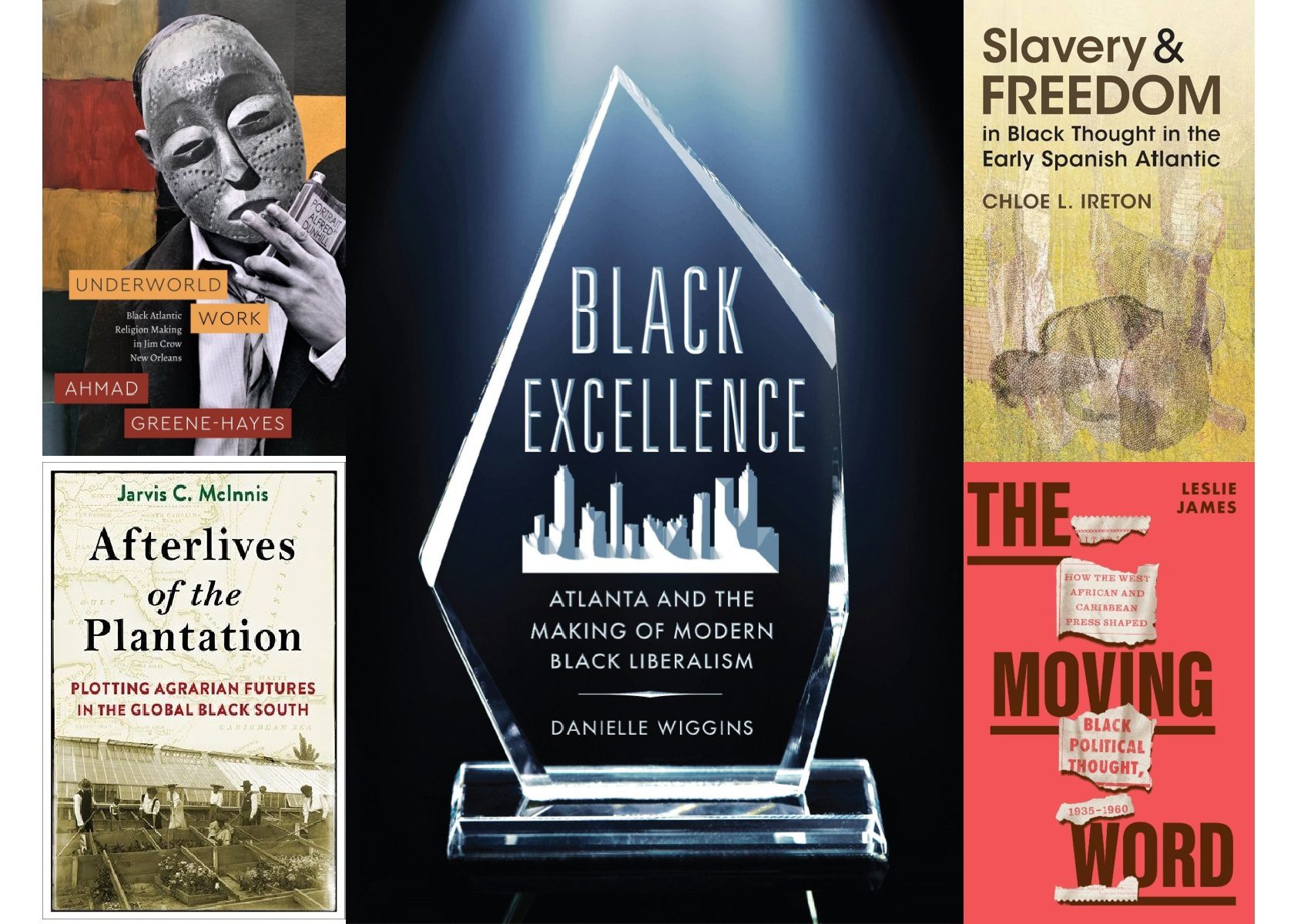
The African American Intellectual History Society (AAIHS) is pleased to announce the finalists for the ninth annual Pauli Murray Book Prize for the best book in Black intellectual history. Named after lawyer, author, and women’s rights activist-intellectual Pauli Murray, this prize recognizes the best book concerning Black intellectual history (broadly conceived) published between January 1, 2025 and December 31, 2025 by a member of AAIHS. The winner of the 2026 Pauli Murray Book Prize will receive $1,500, a featured roundtable on the book in Global Black Thought, and a featured interview published in Black Perspectives. The prize is open to scholars at all stages of their academic careers. The award winner will be announced at the 2026 AAIHS Conference, which will be held from March 27-28, 2026. Here are the five finalists selected by this year’s fellowship committee and the AAIHS leadership team.
Ahmad Green-Hayes, Underworld Work: Black Atlantic Religion Making in Jim Crow New Orleans (Chicago University Press)
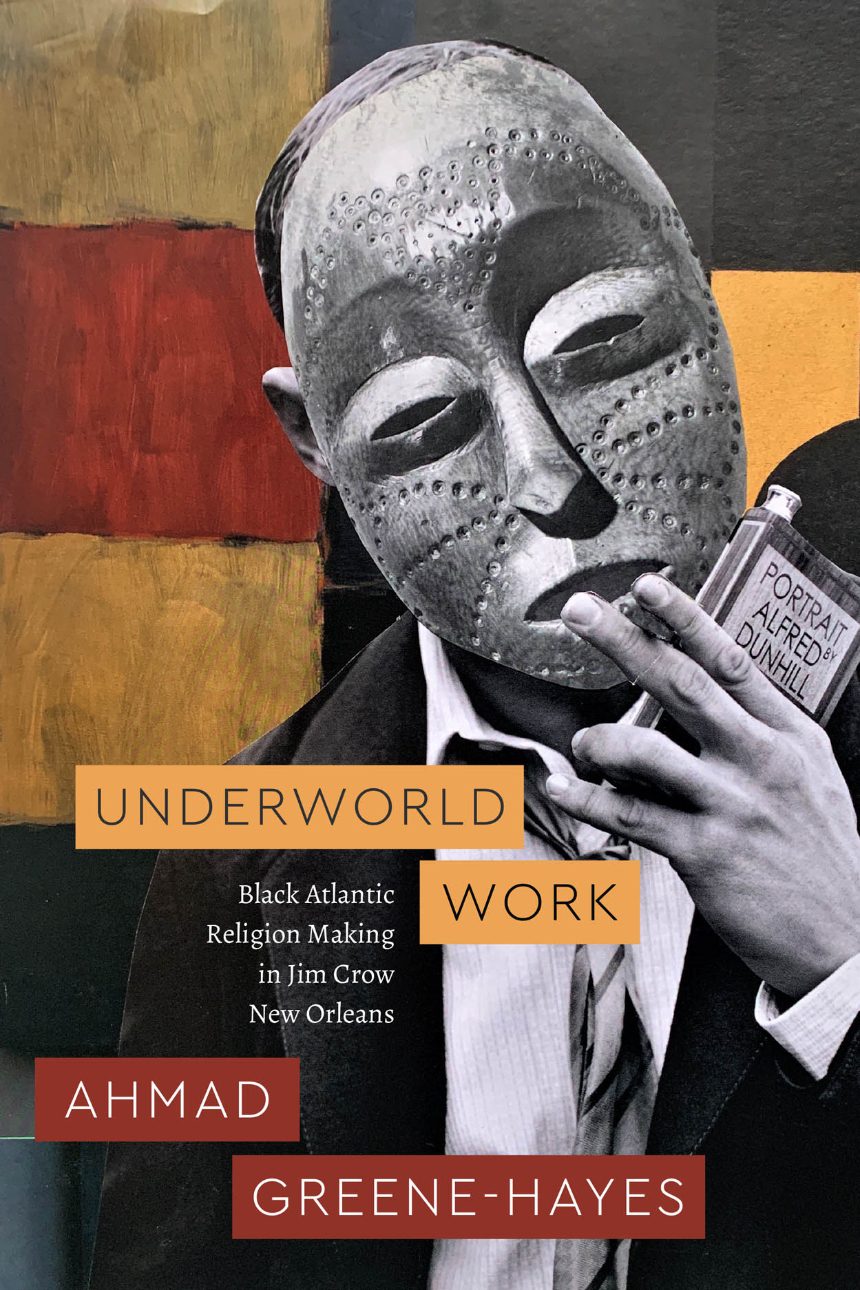 A rethinking of African American religious history that focuses on the development and evolution of Africana spiritual traditions in Jim Crow New Orleans. When Zora Neale Hurston traveled to New Orleans, she encountered a religious underworld, a beautiful anarchy of spiritual life. In Underworld Work, Ahmad Greene-Hayes follows Hurston on a journey through the rich tapestry of Black religious expression from emancipation through Jim Crow. He looks within and beyond the church to recover the diverse leadership of migrants, healers, dissidents, and queer people who transformed their marginalized homes, bars, and street corners into sacred space. Greene-Hayes shows how, while enclosed within an anti-black world, these outcasts embraced Africana esotericisms—ancestral veneration, faith healing, spiritualized sex work, and more—to conjure a connection to freer worlds past and yet to come. In recovering these spiritual innovations, Underworld Work celebrates the resilience and creativity of Africana religions.
Chloe L. Ireton, Slavery & Freedom in Black Thought in the Early Spanish Atlantic (Cambridge University Press)
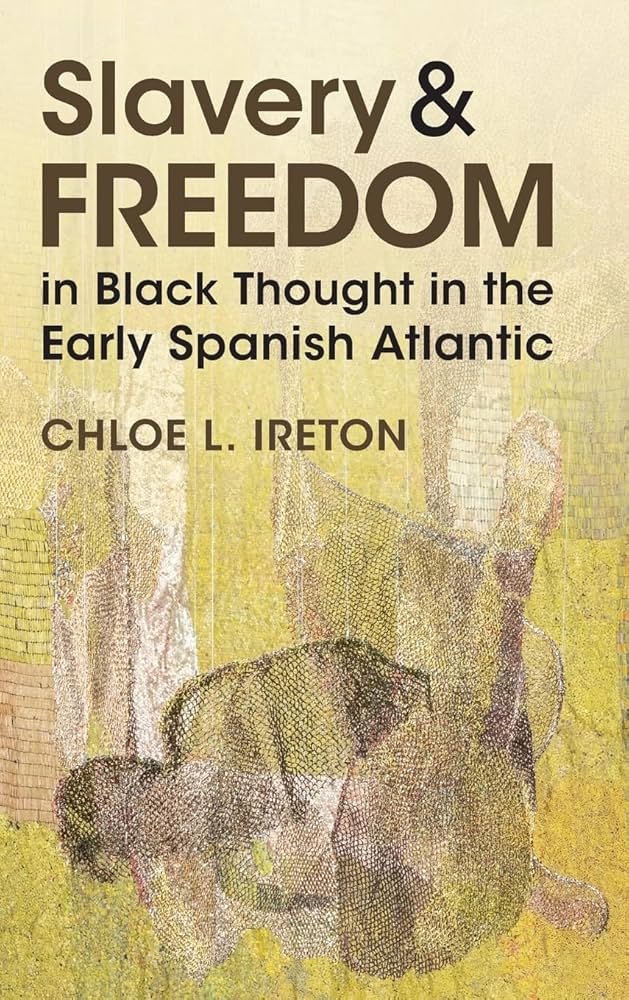 Weaving together thousands of archival fragments, this study explores a shared Black Atlantic world where the meanings of slavery and freedom were fiercely contested and claimed. It recreates the worlds of extraordinary individuals and communities in the long sixteenth century, whilst mapping the development of early modern Black thought about slavery and freedom. From a free Black mother’s embarkation license to cross the Atlantic Ocean, to an enslaved Sevillian woman’s epistles to her freed husband in New Spain, to an enslaved man’s negotiations with prospective buyers on the auction block in Mexico City, to a Black man’s petition to reclaim his liberty after his illegitimate enslavement, Chloe L. Ireton explores how Africans and their descendants reckoned with laws and theological discourses that legitimized the enslavement of Black people and the varied meanings of freedom across legal jurisdictions. Their intellectual labor reimagined the epistemic worlds of slavery and freedom in the early modern Atlantic.
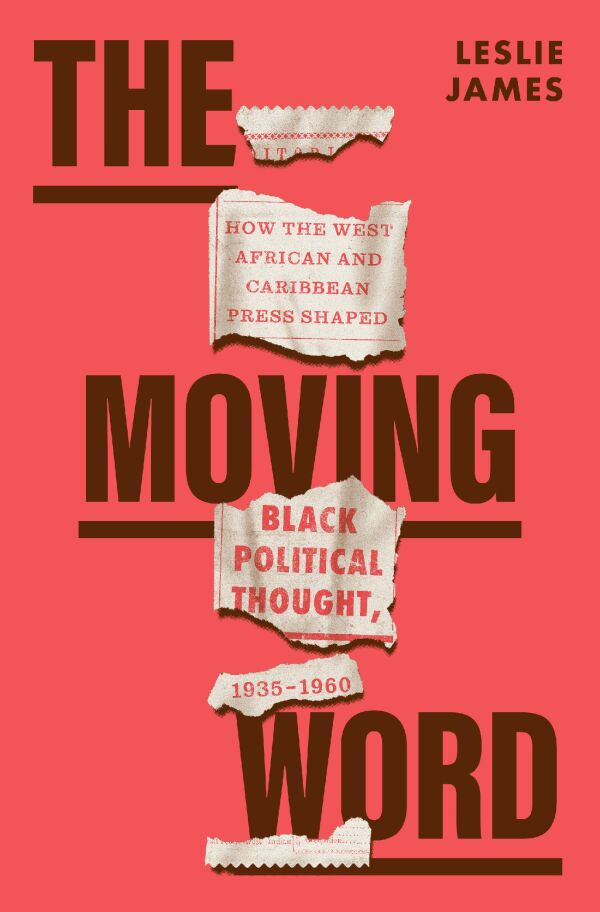 Leslie James, The Moving Word: How the West African and Caribbean Press Shaped Black Political Thought, 1935-1960 (Harvard University Press)
A revelatory account of Black Atlantic political thought in the era of decolonization, revealing how West African and Caribbean newspapers invigorated debates about imperialism, capitalism, and Black freedom. In the 1930s and 1940s, amid intensifying anticolonial activism across the British Empire, dozens of new West African and Caribbean newspapers printed their first issues. With small staffs and shoestring budgets, these newspapers nonetheless became powerful vehicles for the expression of Black political thought. Drawing on papers from Trinidad, Jamaica, Ghana, and Nigeria, Leslie James shows how the press on both sides of the Atlantic nourished anticolonial and antiracist movements. Editors with varying levels of education, men and women journalists, worker and peasant correspondents, and anonymous contributors voiced incisive critiques of empire and experimented with visions of Black freedom. But as independence loomed, the press transformed to better demonstrate the respectability expected of a self-governing people. Seeing themselves as “the Fourth and Only Estate,” the sole democratic institution available to a colonized population, early press contributors experimented with the form and function of the newspaper itself. They advanced anticolonial goals through clipping and reprinting articles from a variety of sources; drawing on local ways of speaking; and manipulating photography, comics, and advertising. Such unruly content, James shows, served as a strategic assertion of autonomy against colonial bureaucracy. Yet in the 1950s, this landscape changed as press professionalism became a proxy for a colony’s capacity to govern itself. Influenced by new political paradigms, papers either standardized their formats or stopped publishing altogether. By the 1960s, intellectual debates about racism and colonialism had moved to other kinds of publications. Illuminating an extraordinary period in the history of Black Atlantic political thought, The Moving Word vividly portrays the power of experimental media.
Jarvis C. McInnis, Afterlives of the Plantation: Plotting Agrarian Futures in the Global Black South (Columbia University Press)
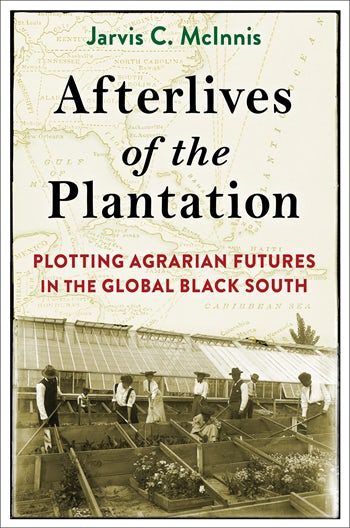 Built on the grounds of a former cotton plantation, the Tuskegee Institute, founded by Booker T. Washington, offered agricultural and industrial education as a strategy for Black self-determination. There—and in many other communities in the U.S. South, the Caribbean, and Central America—Black people repurposed and regenerated what had been a place of enslavement into a site for imagining alternative futures. Jarvis C. McInnis charts a new account of Black modernity by centering Tuskegee’s vision of agrarian worldmaking. He traces the diasporic ties and networks of exchange that linked Black communities in the late nineteenth and early twentieth centuries. Although Washington is often regarded as an accommodationist, McInnis shows how artists, intellectuals, and political leaders—including George Washington Carver, Jean Price-Mars, Zora Neale Hurston, Claude McKay, and Marcus Garvey—adapted Tuskegee’s methods into dynamic strategies for liberation in places like Cuba, Puerto Rico, Haiti, and Jamaica. Even as the legacy of the plantation continued to circumscribe Black life, these thinkers found resources in its ruins to forge new theories and practices of progress, aesthetic innovation, and freedom that contributed to the New Negro Movement of the 1920s and 1930s. In contrast to traditional understandings of Black modernity as urban and premised on northward migration, McInnis foregrounds rural settings and practices of place making, rootedness, and liberatory agriculture. Shedding new light on the transnational influence of a historically Black institution in the U.S. South, Afterlives of the Plantation remaps Black cultural, intellectual, and political histories down to the very soil.
Danielle Wiggins, Black Excellence: Atlanta and the Making of Modern Black Liberalism (Penn Press)
 Black Excellence offers a provocative new history of modern black liberalism by situating the seemingly conservative tendencies of black elected officials in the post–civil rights era within neoliberal American politics and an enduring black liberal tradition. In the 1970s and ’80s, cities across the country elected black mayors for the first time. Just as these officials gained political power, however, their cities felt the full brunt of white flight and deindustrialization. Tasked with governing cities in crisis, black political leaders responded in seemingly conservative ways to the social problems that austerity worsened. Nowhere was this response more evident than in Atlanta. In the nation’s preeminent black urban regime, black leaders such as mayors Maynard Jackson and Andrew Young employed the power of policing and the private sector to discipline black Atlantans, hoping they would equip vulnerable communities with the tools to manage the volatility of the era. Danielle Wiggins shows that these punitive responses to the problems of crime, family instability, and unemployment were informed by black liberalism’s disciplinary impulse: an enduring tendency to reform behaviors believed to threaten black survival in a white supremacist nation. Forged in response to the violence of Jim Crow, the disciplinary impulse relied upon notions of pathology and its inverse, black excellence. Wiggins identifies several black liberal efforts to cultivate excellent black communities, families, and workers in the post–civil rights era, including community policing, corporate-sponsored family initiatives, and black entrepreneurship. In embracing disciplinary strategies, however, black liberals often focused on behavior at the expense of addressing structural inequality. Consequently, their approaches dovetailed with those of the “New” Democrats, whose post–Great Society social policies were informed by urban black liberals. Black Excellence reveals thus how urban black liberals not only reshaped black politics but, as Democrats, also helped build the neoliberal Democratic Party.