
2026 AAIHS Award Winners
 *At the 11th annual meeting of the African American Intellectual History Society (AAIHS) in Pittsburgh, we honored the recipients of this year’s awards. Please join us in celebrating the accomplishments of these talented scholars!
Pauli Murray Book Prize
The African American Intellectual History Society is pleased to announce the 2026 Pauli Murray Book Prize for the best book in Black intellectual history. Named after lawyer, author, and women’s rights activist-intellectual Pauli Murray, the prize recognizes the best book concerning Black intellectual history (broadly conceived) published between January 1, 2025 and December 31, 2025, by a member of AAIHS. The winner of the 2026 Pauli Murray Book Prize will receive a monetary prize, a featured roundtable on the book in Global Black Thought, and a featured interview published in Black Perspectives.
We are pleased to announce that this year’s winner is Jarvis C. McInnis, author of Afterlives of the Plantation: Plotting Agrarian Futures in the Global Black South (Columbia University Press, 2025).
 Jarvis C. McInnis is an Associate Professor of English at Duke University. A native of Gulfport, Mississippi, he is a proud summa cum laude graduate of Tougaloo College in Tougaloo, Mississippi, where he earned a B.A. in English, as well as Columbia University in the City of New York, where he earned a Ph.D. in English & Comparative Literature. McInnis is an interdisciplinary scholar of African American & African Diaspora literature and culture with teaching and research interests in the Global South (primarily the US South and the Caribbean), black geographies and ecologies, sound studies, visual culture, and the archive.
He is the author of Afterlives of the Plantation: Plotting Agrarian Futures in the Global Black South, published in May 2025 by Columbia University Press. It charts an alternative cultural, intellectual, and political genealogy of Black modernity by centering Booker T. Washington’s school, the Tuskegee Institute, as a crucible of black transnational and diasporic relations between southern African American and Afro-Caribbean writers, intellectuals, and political leaders in the early twentieth century.
Maria Stewart Journal Article Prize
The African American Intellectual History Society is pleased to announce the 2026 Maria Stewart Article Prize for the best journal article published in Global Black Thought. Named after abolitionist and women’s rights activist-intellectual Maria Stewart, the prize recognizes the best journal article concerning Black intellectual history (broadly conceived) submitted to the journal in 2025 and scheduled to be published in 2026. All articles accepted by the journal are automatically considered for the prize. The winner will receive a monetary award, a certificate, and a featured interview on Black Perspectives.
We are pleased to announce that this year’s winner is Sophia Monegro for the article “Origins of Black Feminist Thought in the Americas: La Negra del Hospital in Colonial Santo Domingo.”
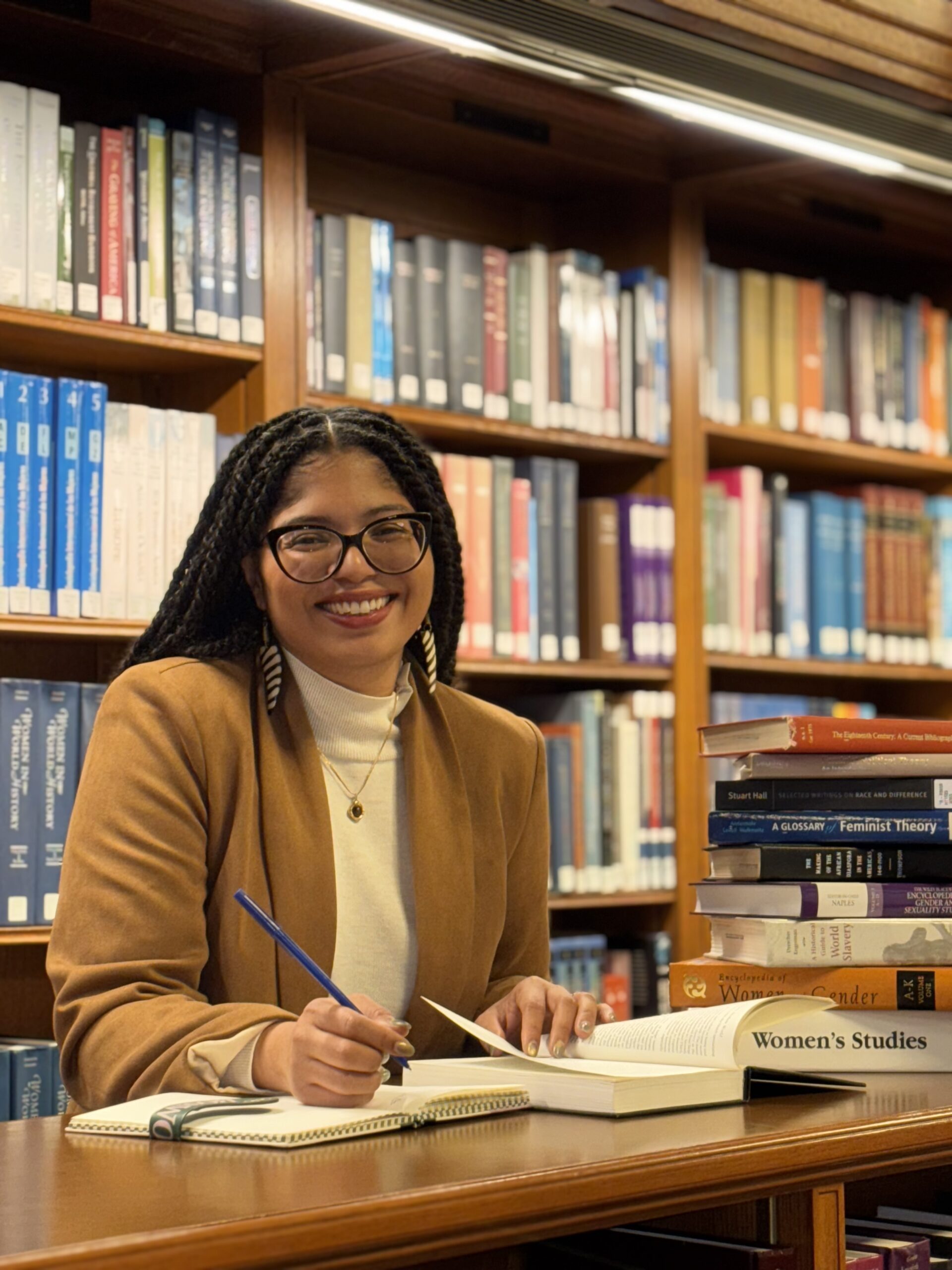 Sophia Monegro is a literary scholar and digital humanist working at the crossroads of Black Women’s Intellectual History, Dominican Studies, and Digital Humanities. She earned her PhD in the African and African Diaspora Studies Department at The University of Texas at Austin in 2025. Currently, Dr. Monegro serves as the inaugural Postdoctoral Fellow at the Center for the Study of Race, Ethnicity, and Equity at Washington University in St. Louis. Starting this July, Sophia Monegro will join the faculty at Smith College as a tenure-track Assistant Professor in Africana Studies. Her research, featured in Oxford Bibliographies in Latino Studies and the Global Black Thought Journal, excavates Black Feminist thought and African descendant women’s activism in colonial Santo Domingo. The Fulbright Program, Mellon Foundation, and American Association of University Women have supported her research.
C.L.R. James Research Fellowship
The African American Intellectual History Society is pleased to announce the 2026 C.L.R. James Research Fellowship to support research towards the completion of a dissertation or publication of a book. Named after Afro-Trinidadian theorist C.L.R. James, the research fellowships are intended to promote research in Black intellectual history by graduate students, independent scholars, and faculty members at any rank. Two fellowships of $2,000 are awarded to help cover the costs of domestic or international travel necessary to conduct research.
 Tomi Onabanjo is a doctoral candidate in the Department of History at New York University (NYU), who studies the intellectual history of Africa and the African diaspora. His research traces the history of various ideas of Asia—or “the Orient”—in the Yorùbá-speaking lands of southwestern Nigeria during the period of British colonial rule preceding the Second World War (1861–1939). Drawing on missionary letters, ethnographic texts, colonial files, printed newspapers, alongside published pamphlets, petitions, and booklets, Tomi examines the political, economic, and social implications of this “Orientalist” discourse and how it reflects a longstanding attempt by African and African diasporic historical actors to negotiate their position on the world stage.
Tomi is currently a Burbank-Cooper Research Fellow, a Primary Editor for the Journal of the History of Ideas (JHI) Blog, and a former National Book Critics Circle (NBCC) Emerging Critic. His writing has appeared in The European Review of Books, Chicago Review of Books, and Electric Literature. He holds a BA in History and Africana Studies from Brown University.
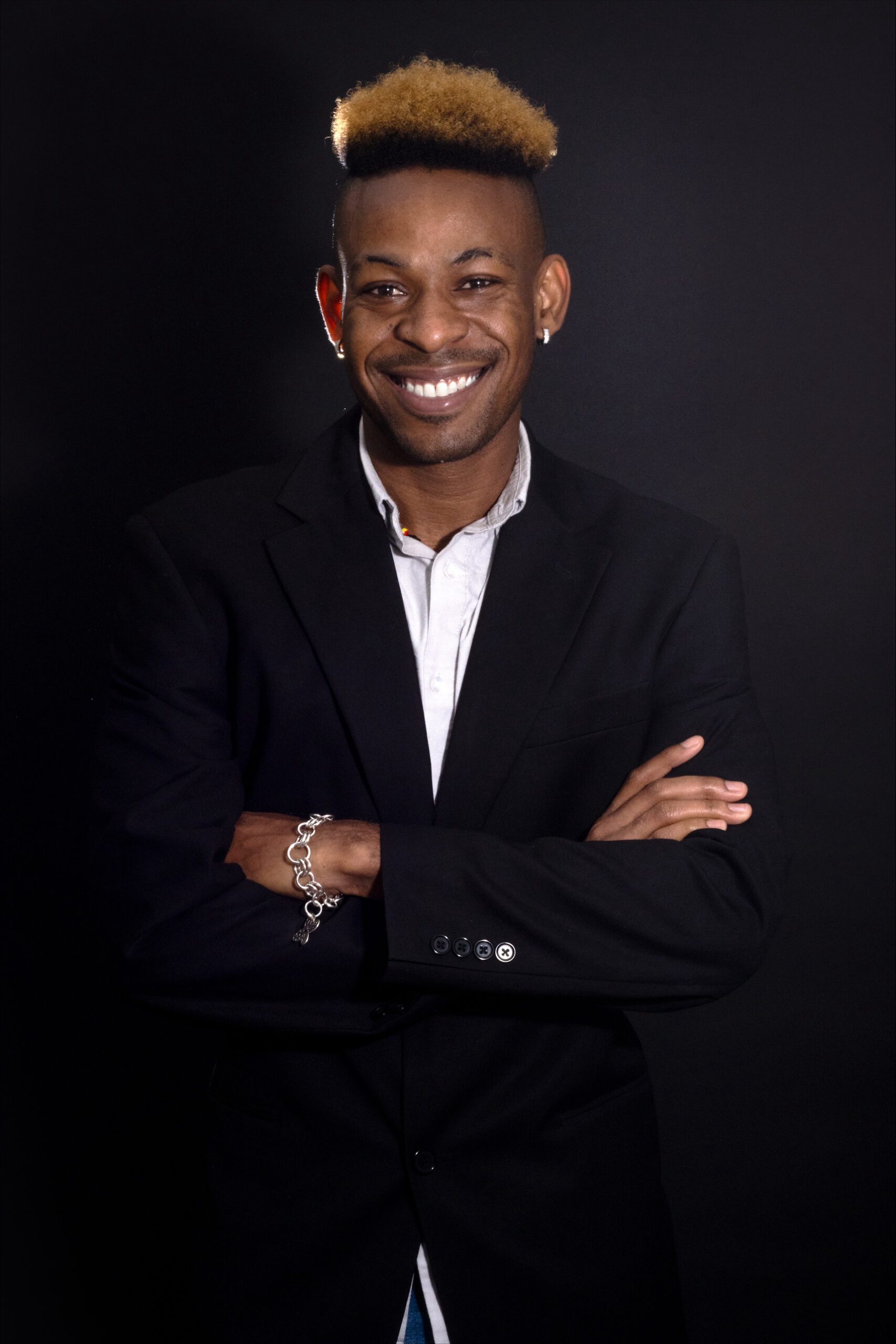 Webster McDonald is an artist-scholar-educator who theorizes a “BlackQueer” Jamaican, post-colonial subjectivity to subvert normative cultural discourses like colonialism, anti-Blackness, and hegemonic masculinity. McDonald’s artistic and theory-infused work includes Critical Decolonial Monodrama Performance, Choreography, Directing, Devising Theatre, and Dance Dramaturgy. His book project, Archival Weight: Sexuality, Citizenship, and the Performance of Black and Queer Life in Jamaica, considers “archival weight” as a metaphor and a material reality: that is, the weight of history bearing down on the body, embedded in the state, and circulating through cultural formations. Archival Weight offers an interdisciplinary and decolonial inquiry into how the past lives on/in the flesh and futures of Black queer subjects.
McDonald previously joined Northwestern University’s Slippage lab as the 2024-2025 Postdoctoral Affiliate supported by the Mellon Foundation grant, Race, Black Dance and Geographies of Freedom, where he is co-editing the anthology Black Social Dance: Embodied Geographies of Freedom and a Chapbook with Professor Thomas F. DeFrantz. He is currently an assistant professor of Performance Studies at the University of Kansas, where he teaches graduate courses in Post-Colonial Theory and Undergraduate courses in Movement Theory.
Copyright © AAIHS. May not be reprinted without permission.