
The Best Black History Books of 2025
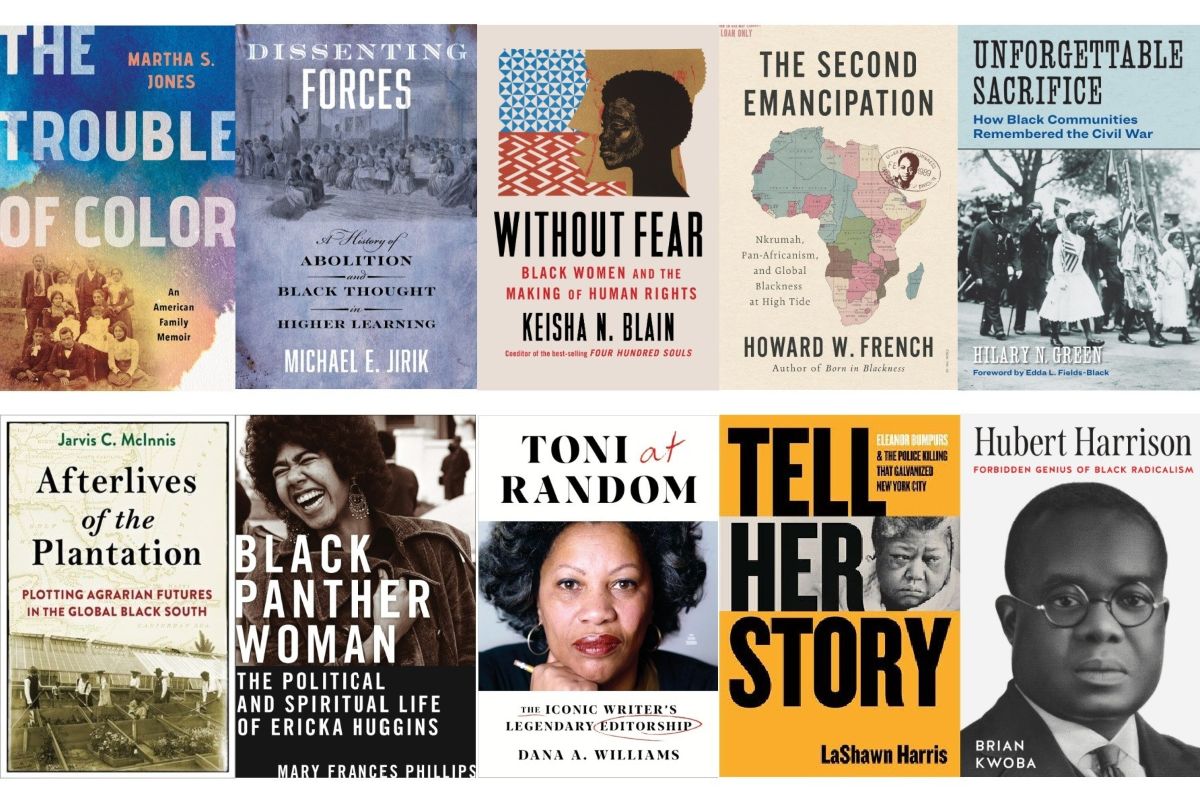
We are pleased to release this year’s AAIHS list of the best books published in 2025! Check out this extraordinary list of great books from 2025 that offer varied historical perspectives on the Black experience in the United States and across the globe. From books on Black women and state-sanctioned violence to an in-depth analysis of Kwame Nkrumah’s life and legacy, the diverse selections included in this list will enhance your reading list for the new year and deepen your understanding of Black people’s ideas and experiences in every part of the globe.
Keisha N. Blain, Without Fear: Black Women and the Making of Human Rights (W.W. Norton, 2025)
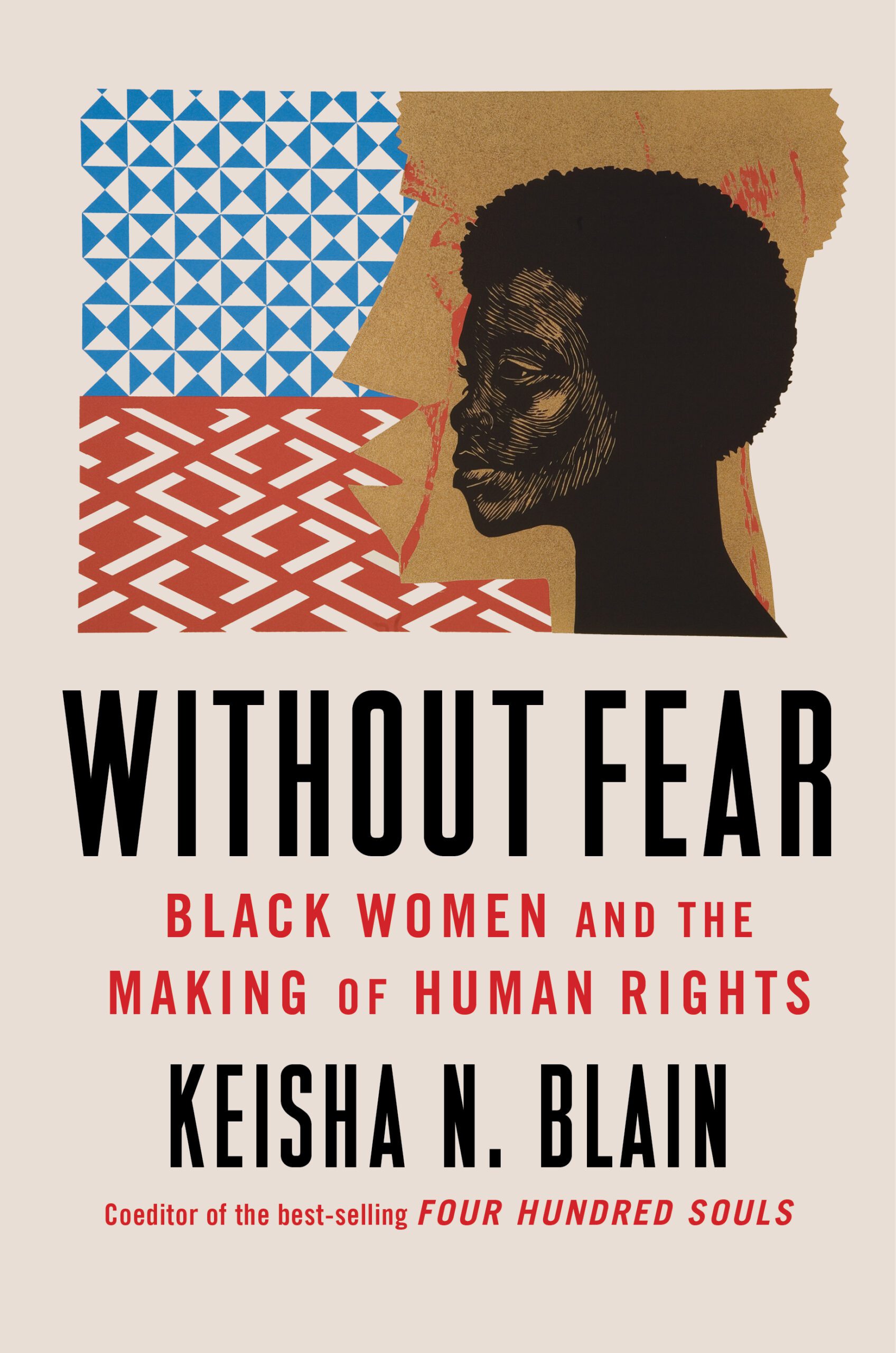 Even before they were recognized as citizens of the United States, Black women understood that the fights for civil and human rights were inseparable. Over the course of two hundred years, they were at the forefront of national and international movements for social change, weaving connections between their own and others’ freedom struggles around the world. Without Fear tells how, during American history, Black women made humans rights theirs: from worldwide travel and public advocacy in the global Black press to their work for the United Nations, they courageously and effectively moved human rights beyond an esoteric concept to an active, organizing principle. Acclaimed historian Keisha N. Blain tells the story of these women—from the well-known, like Ida B. Wells, Madam C. J. Walker, and Lena Horne, to those who are still less known, including Pearl Sherrod, Aretha McKinley, and Marguerite Cartwright. Blain captures human rights thinking and activism from the ground up with Black women at the center, working outside the traditional halls of power. By shouldering intersecting forms of oppression—including racism, sexism, and classism—Black women have long been in a unique position to fight for freedom and dignity. Without Fear is an account of their aspirations, strategies, and struggles to pioneer a human rights approach to combating systems of injustice.
Hilary N. Green, Unforgettable Sacrifice: How Black Communities Remembered the Civil War (Fordham University Press, 2025)
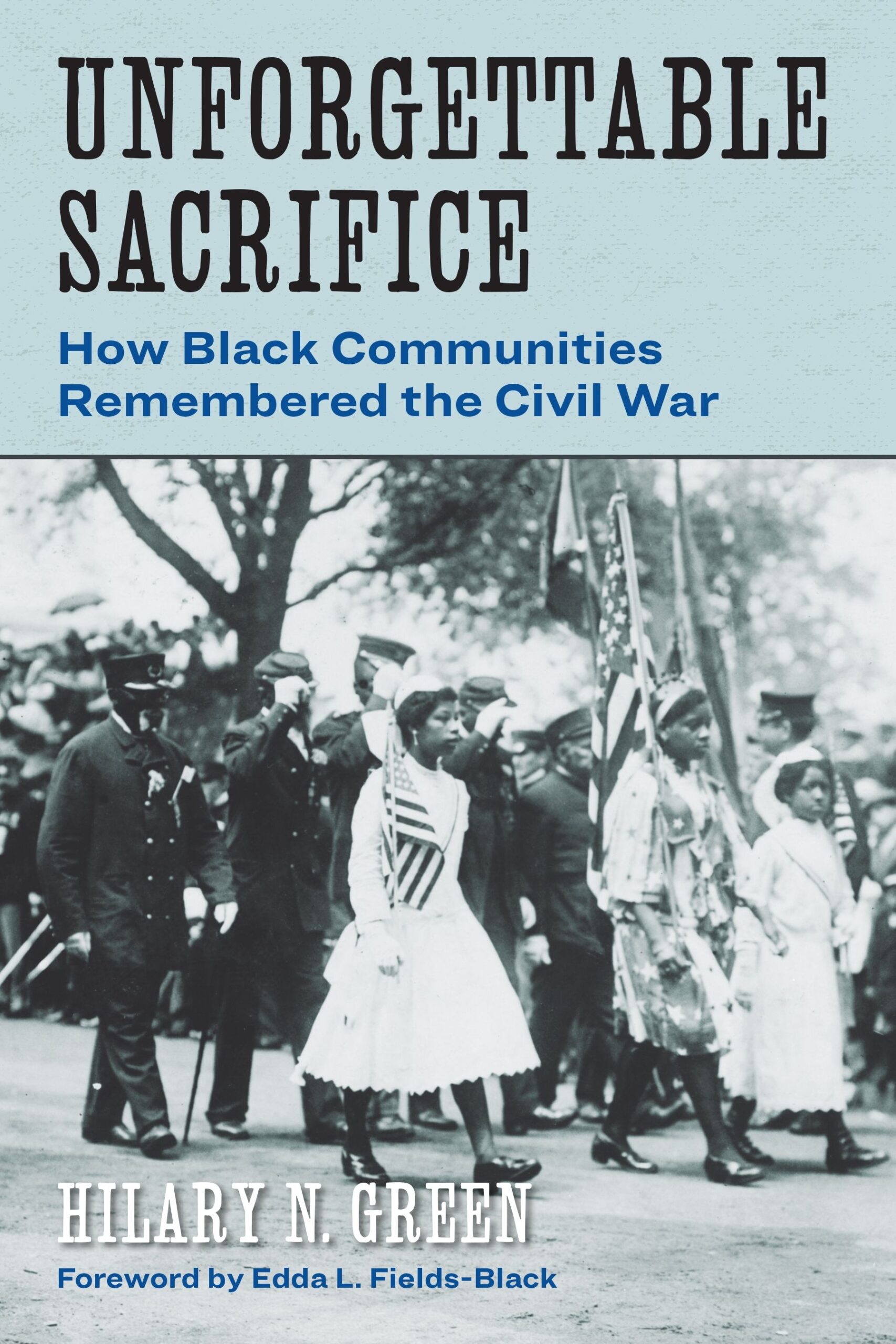 Unforgettable Sacrifice offers a groundbreaking exploration into the heart of African American memory of the Civil War, challenging conventional narratives and revealing a rich history preserved through oral traditions and communal efforts. Through extensive archival research and stories shared on the porches of African American families, Hilary Green provides a detailed examination of how diverse Black communities across the United States have actively preserved and contested the memory of the Civil War, from the nineteenth century to the present. By rejecting the reduction of their experiences to mere footnotes in history, African Americans have established a vibrant commemorative culture that respects the complexity of their ancestors’ sacrifices and struggles. From the rural landscapes of Black Pennsylvanians to the heart of emancipated communities in the South, Green connects the narratives of those who not only fought on battlefields but also in the realms of memory and heritage, ensuring their stories of resilience, courage, and patriotism are remembered. Unforgettable Sacrifice brings to light the untold stories of ordinary African Americans who took extraordinary steps in remembrance and resistance. By refusing to accept diluted narratives and lies, they have ensured the legacy of the Civil War includes the end of slavery, the valor of Black soldiers and civilians, and the ongoing struggle for democracy and full citizenship. This book is a testament to the enduring power of memory and the steadfast spirit of the African American community. It is an indispensable addition to the libraries of scholars, general readers, and descendant communities alike, offering new perspectives on the lasting impact of the Civil War on American identity and the persistent pursuit of justice and equality.
Howard W. French, The Second Emancipation: Nkrumah, Pan-Africanism, and Global Blackness at High Tide (Liveright, 2025)
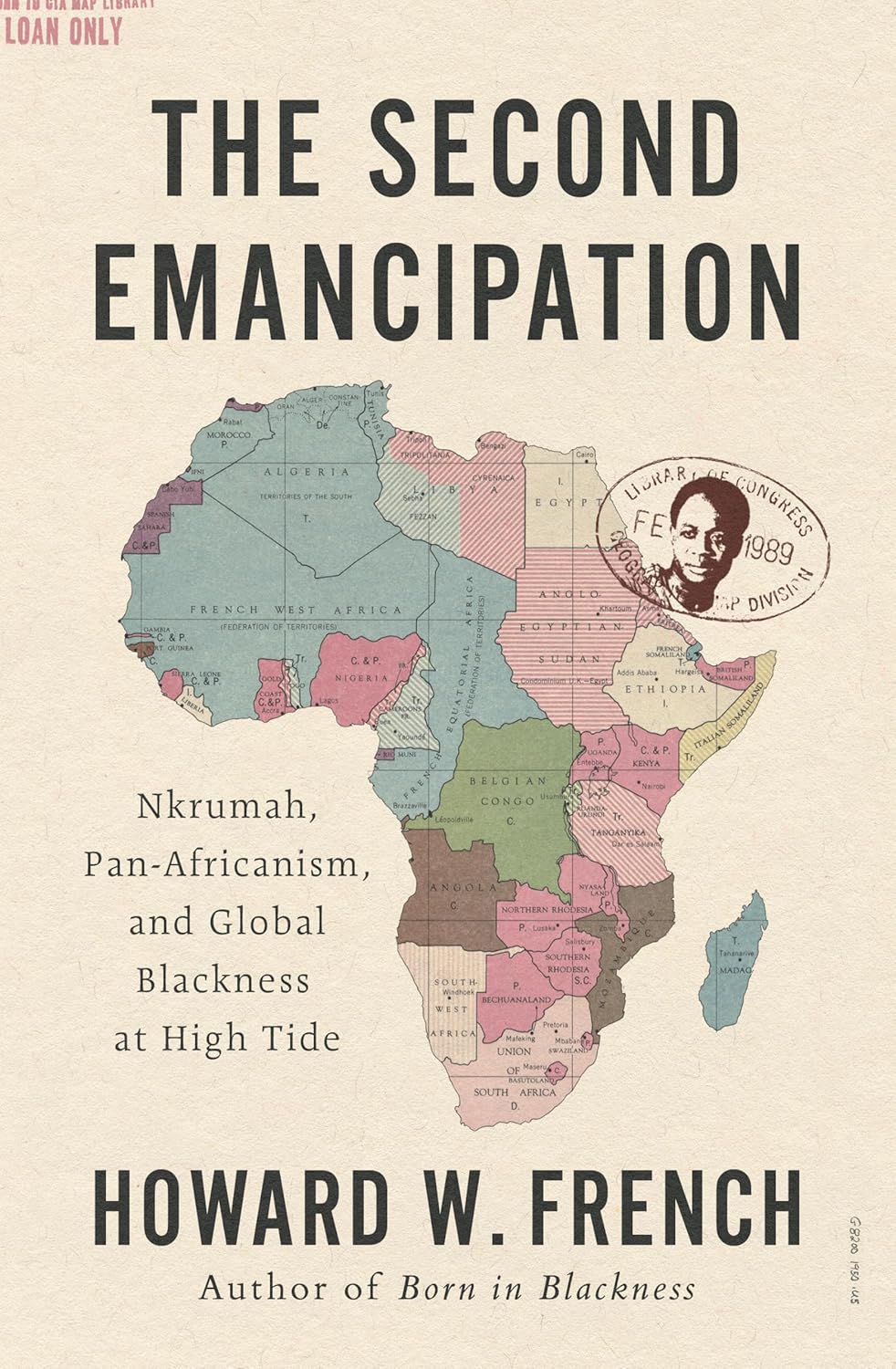 The Second Emancipation, the second work in a trilogy from best-selling author Howard W. French about Africa’s pivotal role in shaping world history, underscores Adam Hochschild’s contention that French is a “modern-day Copernicus.” The title—referring to a brief period beginning in 1957 when dozens of African colonies gained their freedom—positions this liberation at the center of a “movement of global Blackness,” with one charismatic leader, Kwame Nkrumah (1909–1972), at its head. That so few people today know about Nkrumah is an omission that French demonstrates is “typical of our deliberate neglect of Africa’s enormous role in the birth of the modern world.” Determined to re-create Nkrumah’s life as “an epic twentieth-century story,” The Second Emancipation begins with his impoverished, unheralded birth in the far-western region of Ghana’s Gold Coast. But blessed with a deep curiosity, a young Nkrumah pursued an overseas education in the United States. Nowhere is French’s consummate style more vivid than in Nkrumah’s early years in Depression-era America, especially in his mesmerizing portrait of a culturally effervescent Harlem that Nkrumah encountered in 1935 before heading to college. During his student years in Pennsylvania and later as an activist in London, Nkrumah became steeped in a renowned international Black intellectual milieu—including Du Bois, Garvey, Fanon, Padmore, and C.L.R. James, who called him “one of the greatest political leaders of our century”—and formed an ideology that readied him for an extraordinarily swift and peaceful rise to power upon his return to Ghana in 1947. Four years later, in a political landslide he engineered while imprisoned, Nkrumah stunned Britain by winning the first general election under universal franchise in Africa, becoming Ghana’s first independent prime minister in 1957. As leader of a sovereign nation, Nkrumah wielded his influence to promote the liberation of the entire continent, pushing unity as the only pathway to recover from the damages of enslavement and subjugation. By the time national military and police forces, aided by the CIA, overthrew him in 1966, Nkrumah’s radical belief in pan-African liberation had both galvanized dozens of nascent African states and fired a global agenda of Black power. In its dramatic recasting of the American civil rights story and in its tragic depiction of a continent that once exuded all the promise of a newly won freedom, The Second Emancipation becomes a generational work that positions Africa at the forefront of modern-day history.
LaShawn Harris, Tell Her Story: Eleanor Bumpurs & the Police Killing That Galvanized New York City (Beacon Press, 2025)
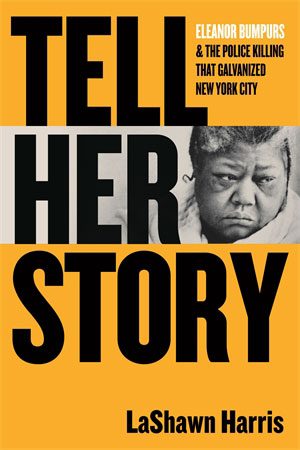 On October 29, 1984, 66-year-old beloved Black disabled grandmother Eleanor Bumpurs was murdered in her own home. A public housing tenant 4 months behind on rent, Ms. Bumpurs was facing eviction when white NYPD officer Stephen Sullivan shot her twice with a 12-gauge shotgun. LaShawn Harris, 10 years old at the time, felt the aftershocks of the tragedy in her community well beyond the four walls of her home across the street. Now an award-winning historian, Harris uses eyewitness accounts, legal documents, civil rights pamphlets, and more to look through the lens of her childhood neighbor’s life and death. She renders in a new light the history of anti-Black police violence and of the watershed anti-policing movement Eleanor Bumpurs’s murder birthed. So many Black women’s lives have been stolen since—Deborah Danner, Sandra Bland, Breonna Taylor, Sonya Massey—and still more are on the line. This deeply researched, intimate portrait of Eleanor Bumpurs’s life and legacy highlights how one Black grandmother’s brutal police murder galvanized an entire city. It also shows how possible and critical it is to stand together against racist policing now.
Michael E. Jirik, Dissenting Forces: A History of Abolition and Black Thought in Higher Learning (New York University Press, 2025)
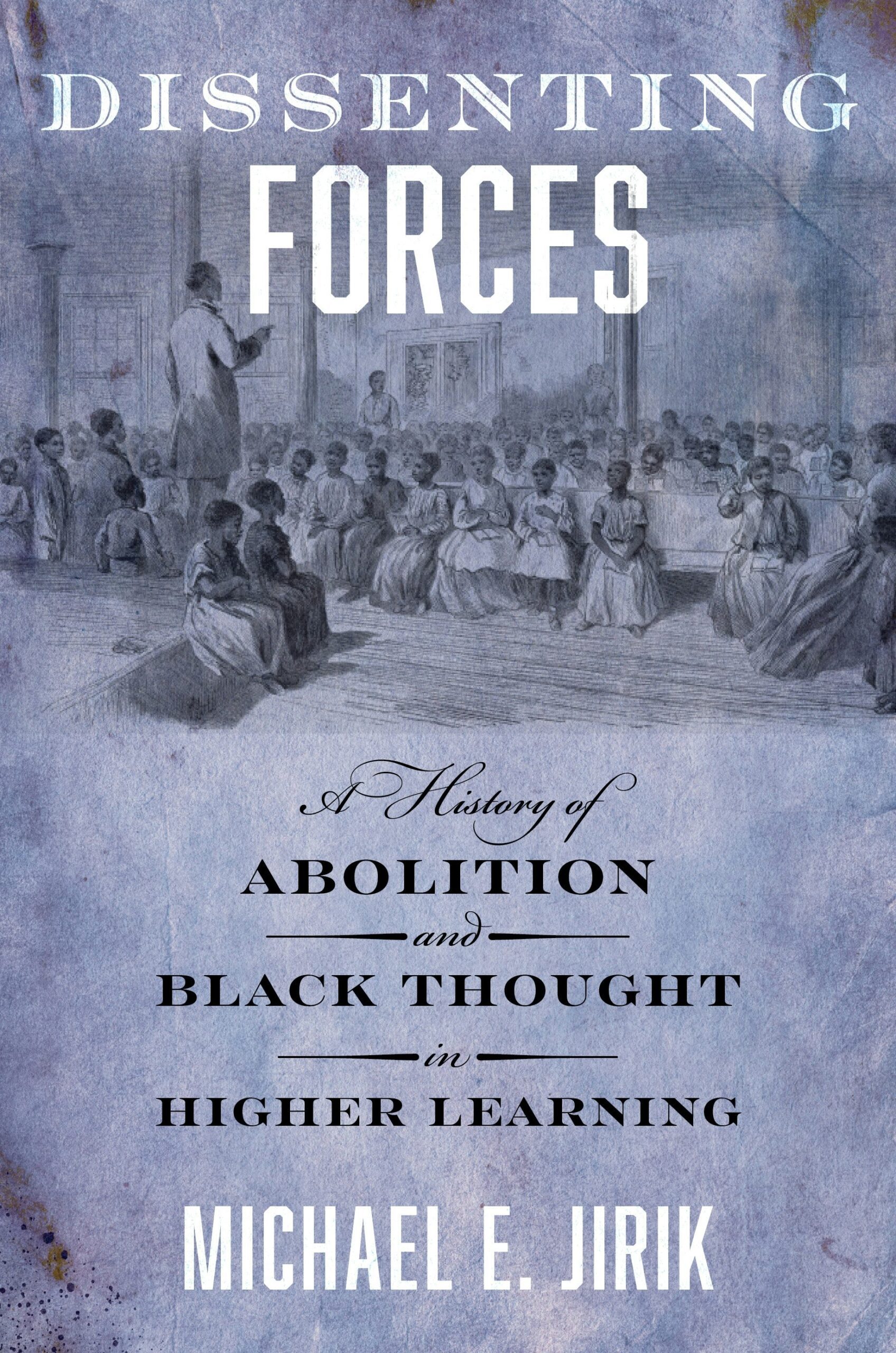 Since their inception in North America, universities have had symbiotic ties to racial slavery and settler colonialism and were incubators of racist thought. In Dissenting Forces, Michael E. Jirik offers a comprehensive study of an underrepresented history: the rise and development of Black thought and abolitionist resistance in American universities. Jirik offers a rich scope of abolitionist protests at colleges, demonstrating how enslaved people, Black abolitionists, and student abolitionists resisted enslavement and racism within, and on the boundaries of, college campuses for centuries. Studying their history and experiences, Black people used intellectual work to advance their struggle for liberation. With the advent of a transformed abolition movement after 1830, Black and white student abolitionists intellectually fought colonizationists on campus to shape arguments for Black freedom and intellectuality that challenged dominant white-supremacist ideologies. In turn, they created a student movement for Black freedom and human equality, making demands for admissions into colleges, and creating the earliest Black colleges in the United States. Demonstrating the ways Black people have resisted racism and forms of oppression in higher learning, Dissenting Forces sheds new light on the significance of Black self-determination and the continuity of Black knowledge traditions committed to creating a different world. Collectively, they developed an idea of Black education’s liberatory potential.
Martha S. Jones, The Trouble of Color: An American Family Memoir (Basic Books, 2025)
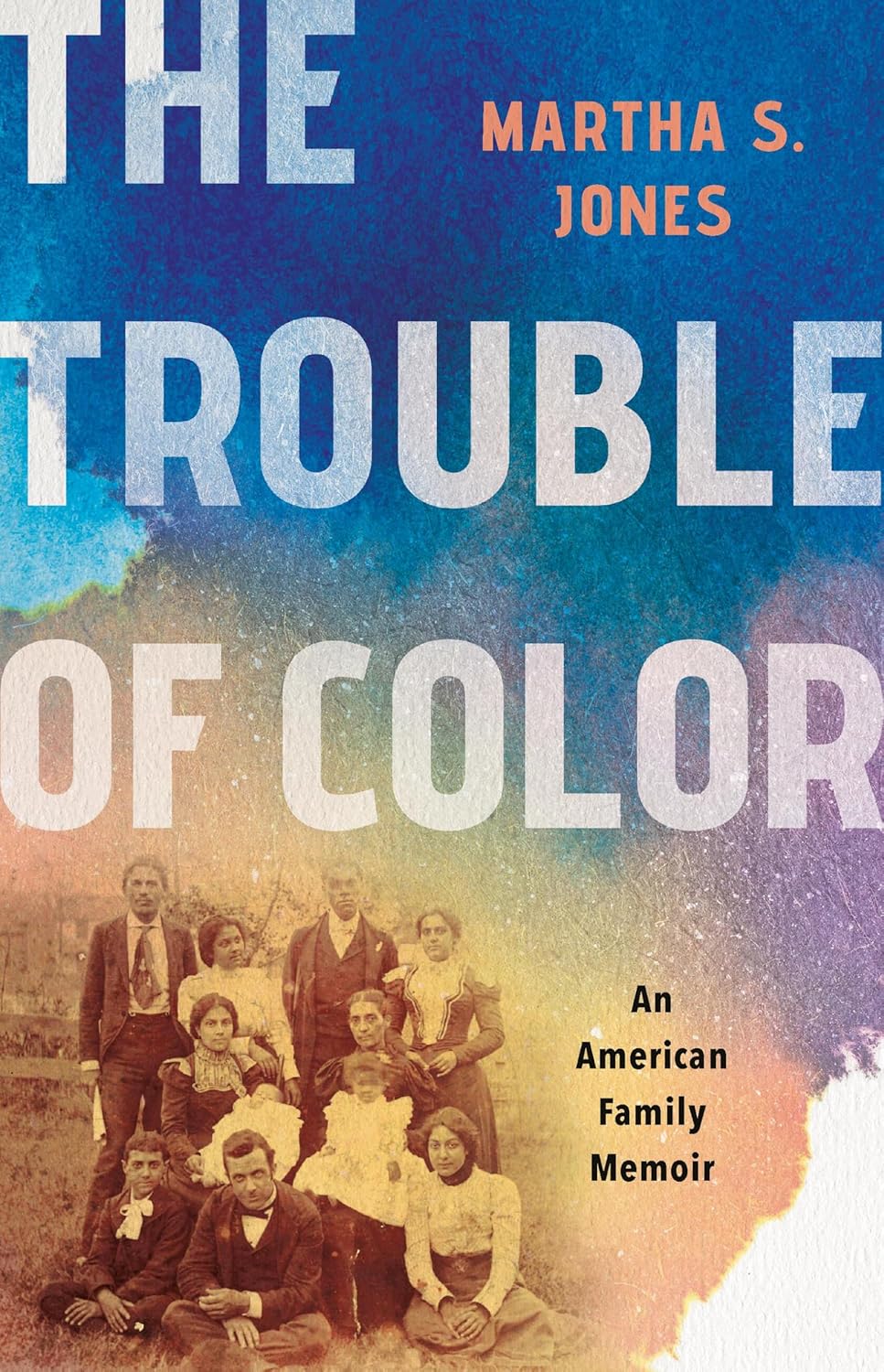 Martha S. Jones grew up feeling her Black identity was obvious to all who saw her. But weeks into college, a Black Studies classmate challenged Jones’s right to speak. Suspicious of the color of her skin and the texture of her hair, he confronted her with a question that inspired a lifetime of introspection: “Who do you think you are?” Now a prizewinning scholar of Black history, Jones delves into her family’s past for answers. In every generation since her great-great-great-grandmother survived enslavement to raise a free family, color determined her ancestors’ lives. But the color line was shifting and jagged, not fixed and straight. Some backed away from it, others skipped along it, and others still were cut deep by its sharp teeth. Journeying across centuries, from rural Kentucky and small-town North Carolina to New York City and its suburbs, The Trouble of Color is a lyrical, deeply felt meditation on the most fundamental matters of identity, belonging, and family.
Brian Kwoba, Hubert Harrison: Forbidden Genius of Black Radicalism (University of North Carolina Press)
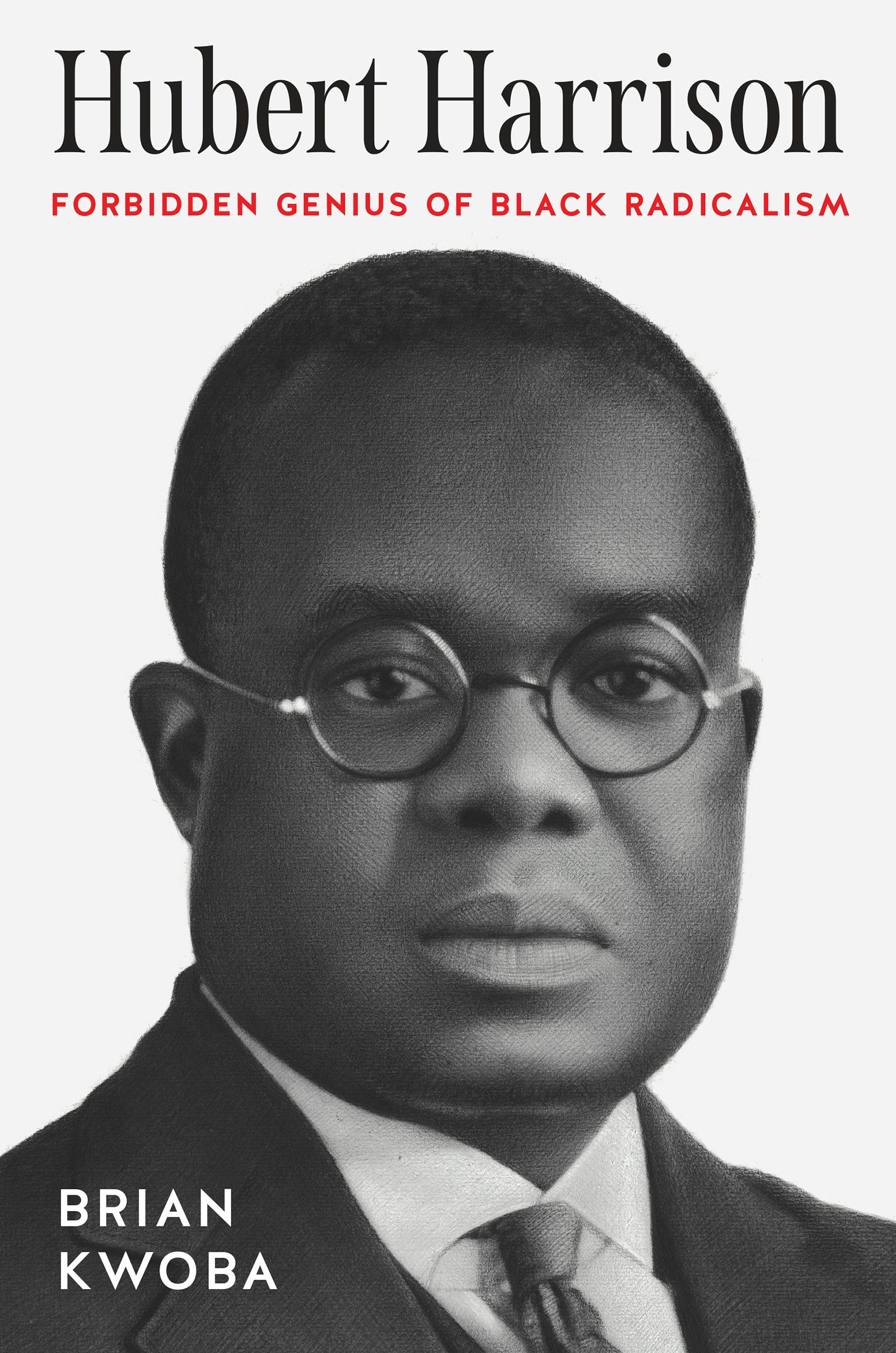 The significance of Hubert Henry Harrison (1883–1927)—as a journalist, activist, and educator—lies in his innovation of radical solutions to radical injustices. He witnessed staggering luxury for the few alongside crushing poverty for the many. White mob violence continually haunted Black communities, while imperial conquest and world wars wrought wanton destruction upon entire nations of people. These conditions sparked a global political awakening to which Harrison gave voice as a leading figure in cutting-edge struggles for socialism, internationalism, free love, freethinking, and free speech. He did far more than cultivate the rich, dark soil in which the so-called “Harlem Renaissance” would take root. Harrison also played a pivotal role in the rise of Marcus Garvey and the emergence of the largest international organization of African people in modern history. Because of his fearless radicalism, however, he has been erased from popular memory. Hubert Harrison presents a historical restoration of Harrison’s numerous intellectual and political breakthroughs. Offering a fresh interpretation of his contributions to social movements for economic, racial, and sexual liberation, Brian Kwoba’s richly textured narrative highlights the startling and continued relevance of Harrison’s visionary thinking across generations.
Jarvis C. McInnis, Afterlives of the Plantation: Plotting Agrarian Futures in the Global Black South (Columbia University Press)
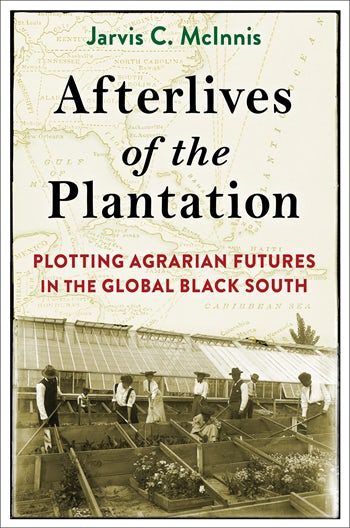 Built on the grounds of a former cotton plantation, the Tuskegee Institute, founded by Booker T. Washington, offered agricultural and industrial education as a strategy for Black self-determination. There—and in many other communities in the U.S. South, the Caribbean, and Central America—Black people repurposed and regenerated what had been a place of enslavement into a site for imagining alternative futures. Jarvis C. McInnis charts a new account of Black modernity by centering Tuskegee’s vision of agrarian worldmaking. He traces the diasporic ties and networks of exchange that linked Black communities in the late nineteenth and early twentieth centuries. Although Washington is often regarded as an accommodationist, McInnis shows how artists, intellectuals, and political leaders—including George Washington Carver, Jean Price-Mars, Zora Neale Hurston, Claude McKay, and Marcus Garvey—adapted Tuskegee’s methods into dynamic strategies for liberation in places like Cuba, Puerto Rico, Haiti, and Jamaica. Even as the legacy of the plantation continued to circumscribe Black life, these thinkers found resources in its ruins to forge new theories and practices of progress, aesthetic innovation, and freedom that contributed to the New Negro Movement of the 1920s and 1930s. In contrast to traditional understandings of Black modernity as urban and premised on northward migration, McInnis foregrounds rural settings and practices of place making, rootedness, and liberatory agriculture. Shedding new light on the transnational influence of a historically Black institution in the U.S. South, Afterlives of the Plantation remaps Black cultural, intellectual, and political histories down to the very soil.
Mary Frances Phillips, Black Panther Woman: The Political and Spiritual Life of Erika Huggins (New York University Press)
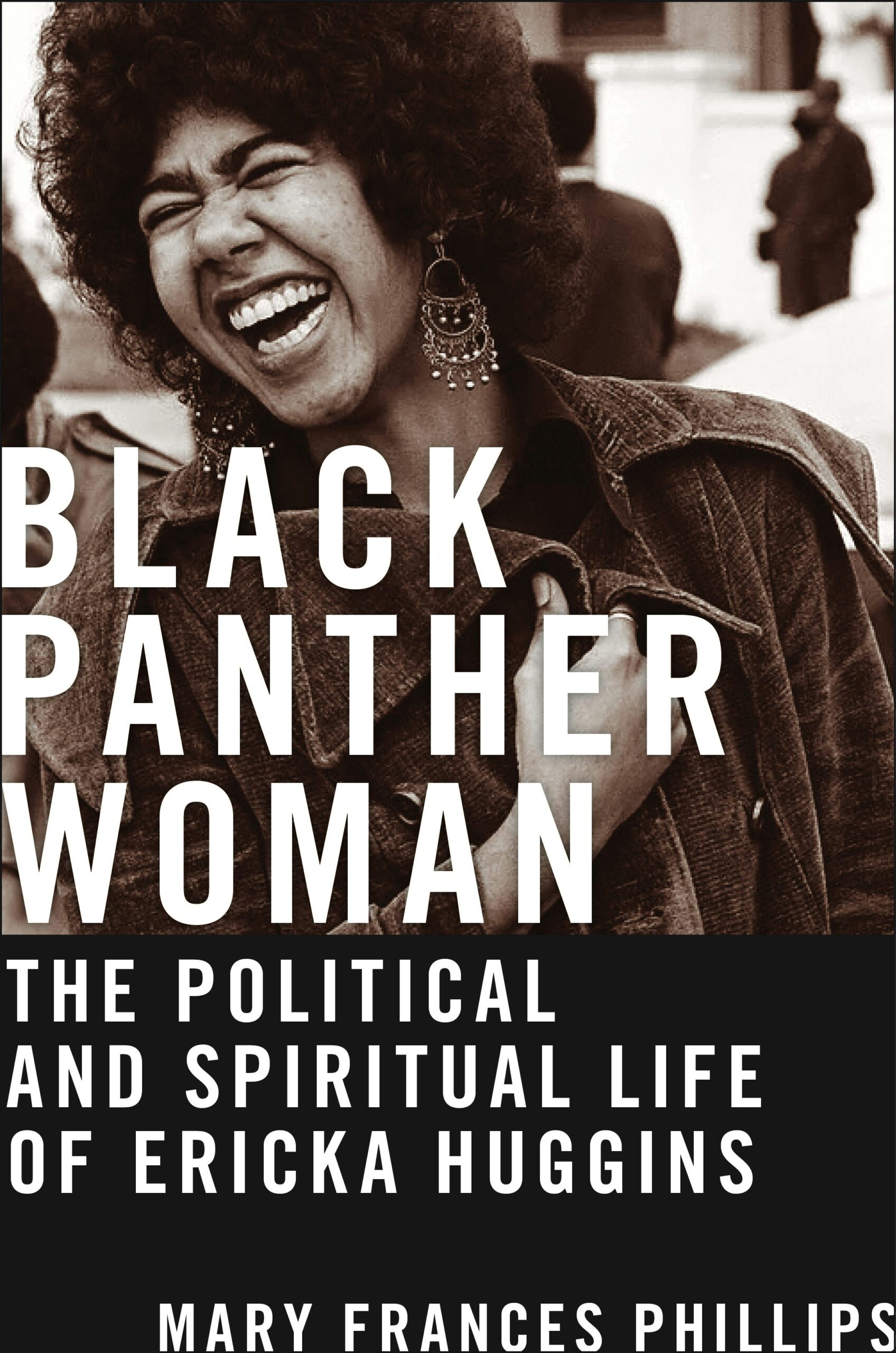 In this groundbreaking biography, Mary Frances Phillips immerses readers in the life and legacy of Ericka Huggins, a revered Black Panther Party member, as well as a mother, widow, educator, poet, and former political prisoner. In 1969, the police arrested Ericka Huggins along with Bobby Seale and fellow Black Panther Party members, who were accused of murdering Alex Rackley. This marked the beginning of her ordeal, as she became the subject of political persecution and a well-planned FBI COINTELPRO plot. Drawing on never-before-seen archival sources, including prison records, unpublished letters, photographs, FBI records, and oral histories, Phillips foregrounds the paramount role of self-care and community care in Huggins’s political journey, shedding light on Ericka’s use of spiritual wellness practices she developed during her incarceration. In prison, Huggins was able to survive the repression and terror she faced while navigating motherhood through her unwavering commitment to spiritual practices. In showcasing this history, Phillips reveals the significance of spiritual wellness in the Black Panther Party and Black Power movement. Transcending the traditional male-centric study of the Black Panther Party, Black Panther Woman offers an innovative analysis of Black political life at the intersections of gender, motherhood, and mass incarceration. This book serves as an invaluable toolkit for contemporary activists, underscoring the power of radical acts of care as well as vital strategies to thrive in the world.
Dana A. Williams, Toni at Random: The Iconic Writer’s Legendary Editorship (Amistad Books, 2025)
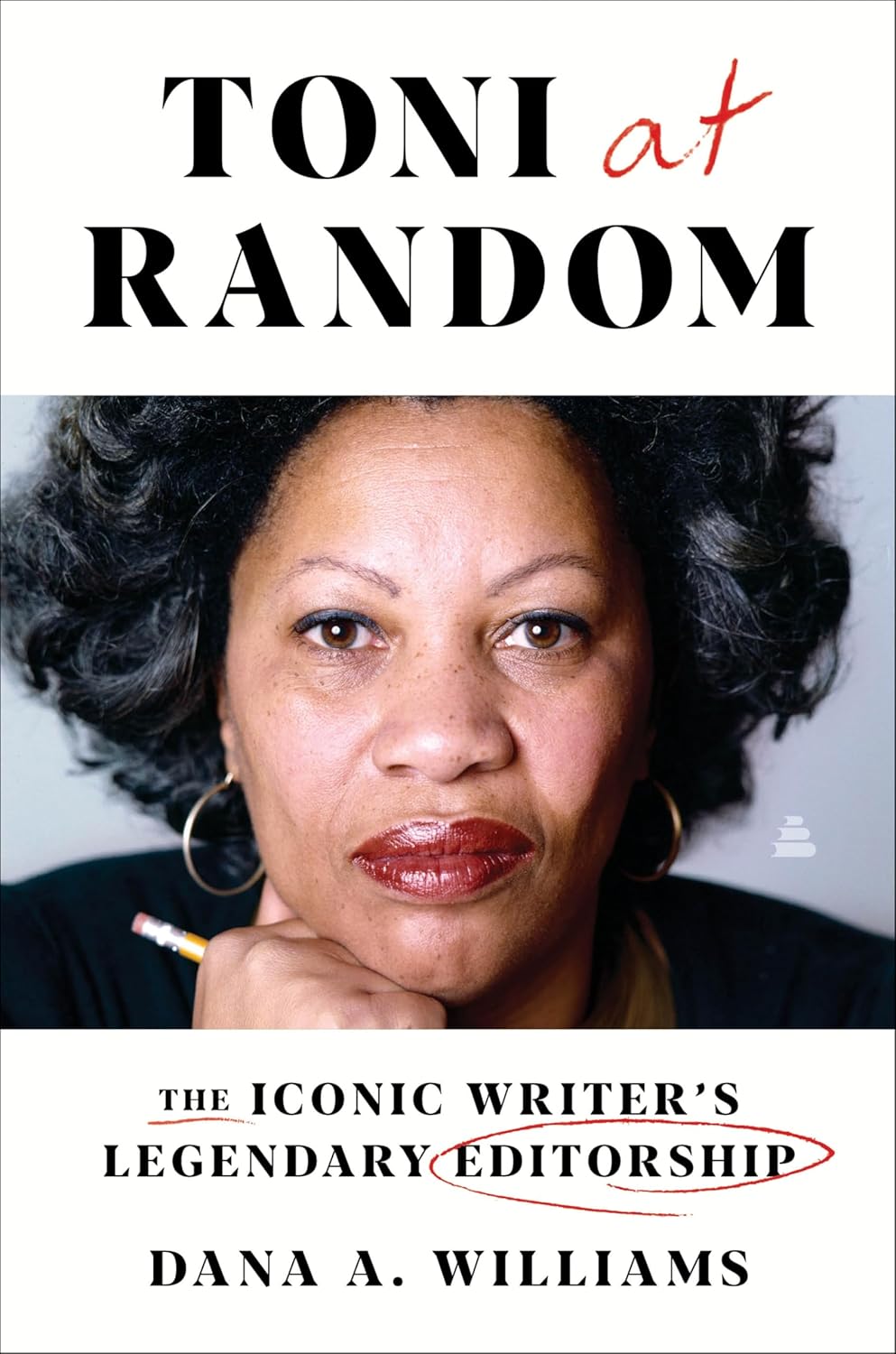 A multifaceted genius, Toni Morrison transcended her role as an author, helping to shape an important period in American publishing and literature as an editor at one of the nation’s most prestigious publishing houses. While Toni Morrison’s literary achievements are widely celebrated, her editorial work is little known. Drawing on extensive research and firsthand accounts, this comprehensive study discusses Morrison’s remarkable journey from her early days at Random House to her emergence as one of its most important editors. During her tenure in editorial, Morrison refashioned the literary landscape, working with important authors, including Toni Cade Bambara, Leon Forrest, and Lucille Clifton, and empowering cultural icons such as Angela Davis and Muhammad Ali to tell their stories on their own terms. Toni Morrison herself had great enthusiasm about Dana Williams’s work on this story, generously sharing memories and thoughts with the author over the years, even giving her the book’s title. From the manuscripts she molded, the authors she nurtured, and the readers she inspired, Toni at Random demonstrates how Toni Morrison has influenced American culture beyond the individual titles or authors she published. Morrison’s contribution as an editor transformed the broader literary landscape and deepened the cultural conversation. With unparalleled insight and sensitivity, Toni at Random charts this editorial odyssey.