
Remembering Rev. Jesse Jackson
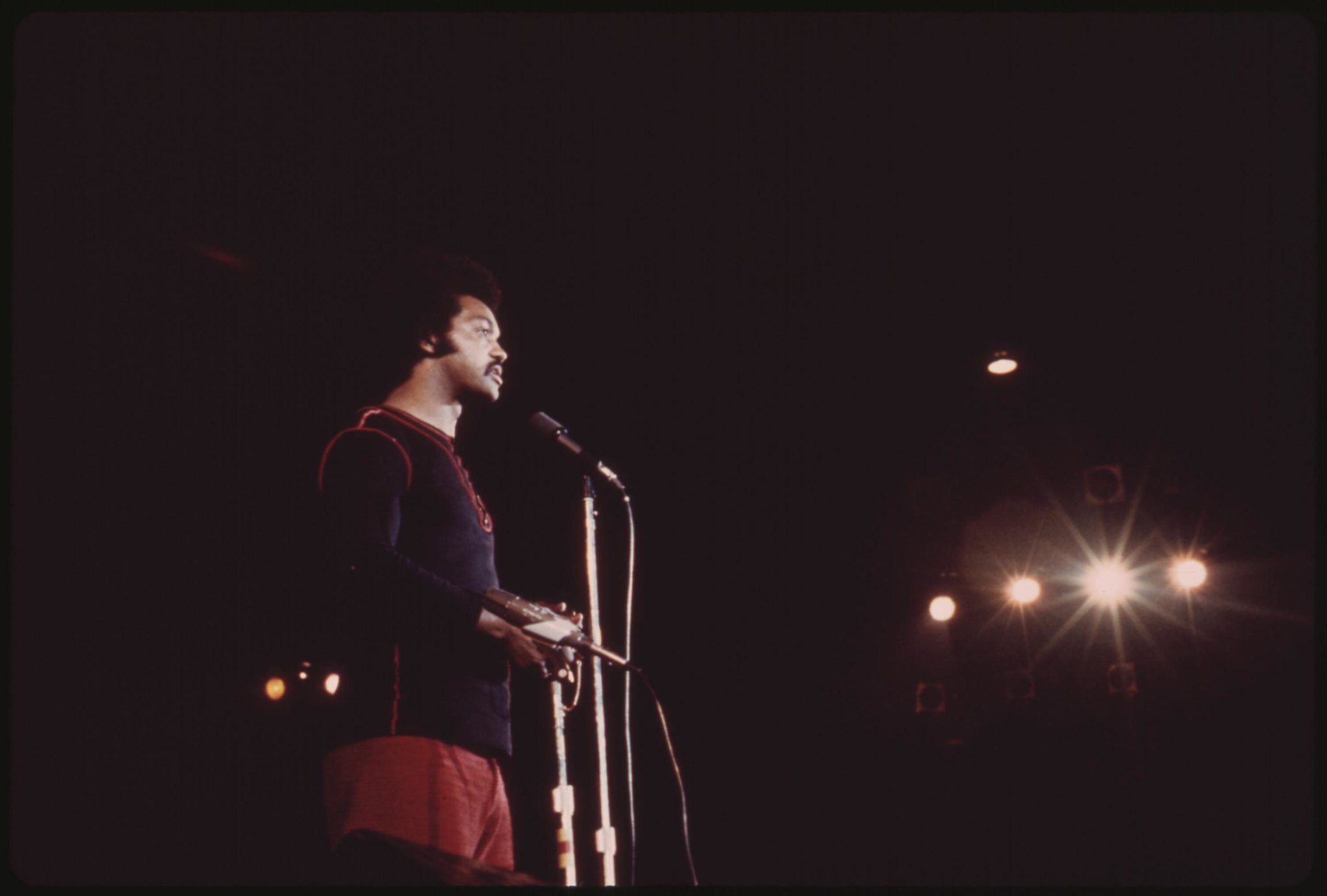
The passing of the Reverend Jesse Jackson (1941-2026) leaves the world without one of its major remaining ties to the Civil Rights era. A native of Greenville, South Carolina, Jackson embodied the Black American experience that so many others have lived. He endured life in the Jim Crow South; would attend the University of Illinois before transferring to North Carolina A&T, an HBCU; and he would later work alongside Dr. Martin Luther King, Jr. and other luminaries of the Civil Rights Movement as the movement’s goals and aspirations transitioned from fighting segregation in the South to campaigning against institutionalized racism nationwide. But it is Jackson’s impact on civil rights activism, political history, and Black intellectual debate in the United States and throughout the world that will be of most interest to readers of Black Perspectives.
Indeed, it is Jackson’s place in the intellectual, cultural, and political history of the late 20th century that makes his life an important window through which to view the post-Civil Rights era. As Keisha N. Blain points out, Jackson’s career as an activist meant he embraced a variety of strategies, such as using economic pressure and political protest, to change the living conditions of millions of Black Americans and other working-class people across the nation. Jackson’s own campaigns for the Humphrey-Hawkins Full Employment Act–a North Star for the progressive and left wings of the Civil Rights and labor movements of the 1960s and 1970s–showcased the lessons that he and other civil and human rights leaders had taken from the 1960s and especially Dr. King’s final crusade–the Poor People’s Campaign of 1968.
Jesse Jackson’s campaigns for the presidency in 1984 and 1988 are the best distillation of Bayard Rustin’s admonition for the Civil Rights Movement to move “from protest to politics.”
Jackson’s runs in the Democratic primaries in both years exemplified the rift within the party between the moderate, centrist Democrats—most notably members of the Democratic Leadership Council such as then-Arkansas Governor Bill Clinton—and the progressive wing of the party. That latter wing’s political and intellectual lineage dated back to the labor and Civil Rights Movements of the mid-20th century while also incorporating newer movements such as the rising LGBTQ rights coalition. These campaigns also included Jackson’s critique of the bipartisan consensus on American foreign policy formed in the later years of the Cold War through his open support for Palestine and his vociferous endorsement of sanctions against South Africa–which are also key parts of his intellectual contribution.
Jackson’s impact on Black intellectual traditions is also critical to consider. He embodied the bridge between older movements for Black freedom and the human rights campaigns of the late 20th and early 21st centuries. His campaigns for president, and his appropriation of the term “rainbow coalition” from earlier, Chicago-based campaigns for social justice, represented a strand of Black, social-democratic thought that flickers within larger reservoirs of Black thought in the present-day. Even critics of Jackson from the left, such as Manning Marable and Adolph Reed, did so from the same left tradition that informed so much of Black political and social thought in the 20th century.
Tim Lacy’s remarkable series on Jackson, published by both the Society of U.S. Intellectual Historians and Black Perspectives, is still an important read about Jackson’s legacy. When we think of the rise of the Black Radical Congress of the late 1990s, it was informed in many ways by a disappointment with how far Jackson’s Rainbow Coalition fell short of expectations.
Even Jackson’s relationships with HBCUs is worth noting in an intellectual context. One of the key links between many Black American civil and human rights leaders is their experience of the intellectual, social, and political culture of HBCUs. Scholars such as Jarvis McInnis, Crystal Sanders, and Jelani Favors have written about the unique intellectual traditions of HBCUs that shaped numerous social movements in the 20th century. Jesse Jackson, a proud alum of North Carolina A&T, is another such example.
The passing of Jesse Jackson also gives us an opportunity to think about how few of the key leaders of the Civil Rights and Black Power movements are still with us. As memories of those movements fade with the passing of such leaders, it will be increasingly important for everyone—historians, archivists, journalists, teachers, and everyday citizens—to keep alive the stories and lessons of the past.
In an age when history, but especially Black history, is under siege, telling the true and complicated story of Jesse Jackson becomes increasingly important. Without these stories, understanding the past—especially the Black past—becomes more difficult. But with these stories, we have a fuller picture of the complicated politics of the post-Civil Rights era, of which Jackson was a critical player. In the days to come, Reverend Jackson’s legacy will be discussed, dissected, and debated. Rest well, Reverend Jackson. The pursuit of a better, more just future continues.
Copyright © AAIHS. May not be reprinted without permission.
Great article Professor Greene! Growing up in Chicago and witnessing the impact Jesse Jackson and Operation PUSH had on our communities was inspiring and encouraging to us young people in Chicago. I received my introduction into Politics during the Mayoral campaign of Harold Washington which Jesse Jackson played an integral role. Jesse was such an inspiration for us to embrace our Blackness in full but also embrace the ethnic diversity of others. Many times, we don’t recognize a person’s greatness until they are no longer with us in the physical but as we look back and reflect on the life of Jesse Jackson, we can truly admit he was a treasure!