Black Women and the Brown Decision
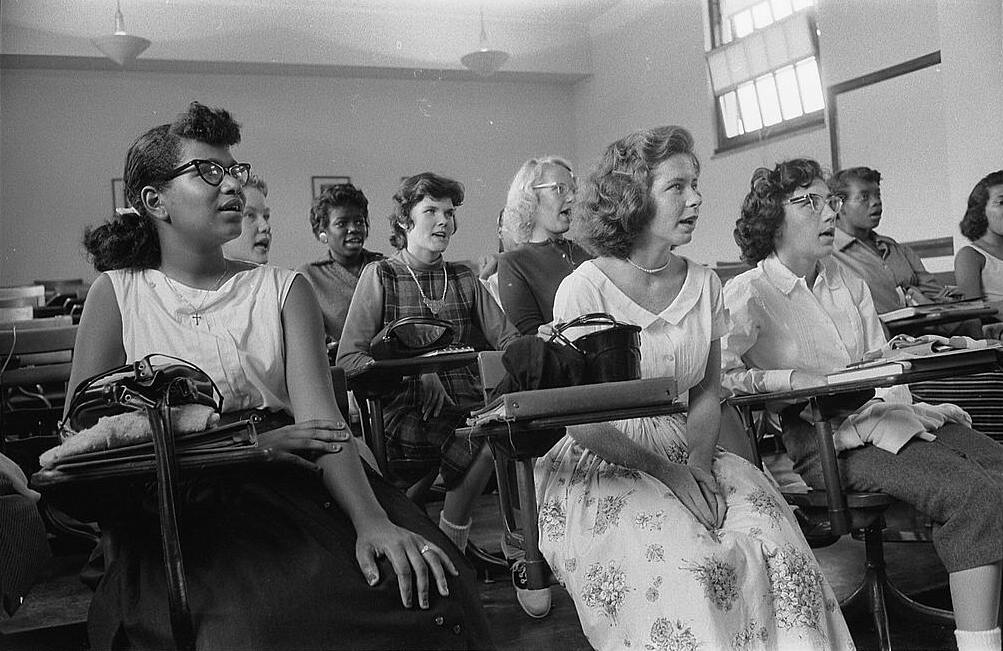
Black American women such as Pauli Murray, Constance Baker Motley, Mamie Phipps Clark, and Ruby Gainer were the architects of the 1954 Supreme Court decision in Brown v. Board of Education. This landmark case, considered one of the most significant in U.S. history, declared segregation in public schools unconstitutional and eroded the precedent of “separate but equal” that had provided the legal rationale for segregation. Ruby Bridges, Malaika Favorite, and other Black girls also left their mark by being at the forefront of the lawsuits that paved the way to Brown.
While these contributions have been omitted from most mainstream historical narratives, Black women and girls laid much of the intellectual foundation for the pivotal case through their words and deeds. Murray, Clark, and Motley, for example, each advanced the ideas that would form the core of the plaintiff’s legal strategy. Pauli Murray crafted an argument that justified the end of segregation through the Fourteenth Amendment while she was a law student at Howard University, several decades before this approach was applied by lawyers in the National Association for the Advancement of Colored People (NAACP). She later authored States’ Laws on Race and Color (1951), a major reference work for civil rights lawyers fighting against segregation in the courts. Her contemporary Mamie Phipps Clark wrote about the impact of segregation on the educational and intellectual development of young Black children in her master’s thesis. Her work then became a crucial part of the social science data that attorneys used in the Brown decision. And in her role as the NAACP’s Legal Defense Fund first female attorney, Constance Baker Motley led the courtroom battle against segregation in several states, including Georgia, Alabama, and Mississippi.
Essays in the Spring 2026 issue of Global Black Thought (Volume 2, Issue 1) assess the role that Black women and girls played in the Brown decision, which gave rise to the civil rights movement of the 1950s and 1960s, and examine their connection to the Supreme Court’s decision within the larger historiography of the Black freedom struggle.
Black women and girls—as students, activists, teachers, concerned mothers, and lawyers—were at the forefront of school desegregation. By exploring their lives and ideas, this special issue broadens our understanding of the case and of Black women’s intellectual history.
A focus on Black women and girls offers a much-needed contribution to the current literature on the Brown case and the civil rights movement in general. Similar to Chana Kai Lee’s For Freedom’s Sake: The Life of Fannie Lou Hamer (1999), Barbara Ransby’s Ella Baker and the Black Freedom Movement: A Radical Democratic Vision (2003), Danielle McGuire’s At the Dark End of the Street: Black Women, Rape, and Resistance, A New History of the Civil Rights Movement from Rosa Parks to the Rise of Black Power (2011), Keisha N. Blain’s Until I am Free: Fannie Lou Hamer’s Enduring Message to America (2021), and many others, this special issue places Black women’s ideas and political activities front and center to demonstrate their contributions as thinkers, strategists, and organizers.
We also are building on the work of those scholars who have demonstrated that African American women consistently made the connection between their quest for full citizenship rights and educational opportunity. In her book, In Pursuit of Knowledge: Black Women and Educational Activism in Antebellum America (2019), Kabria Baumgartner argues that Black women have engaged in a long history of activism to gain equal access to schooling prior to the twentieth century. Baumgartner provides a detailed account of how Black women and girls linked ideas about freedom and democracy to their right to an education.
Rachel Devlin’s A Girl Stands at the Door: The Generation of Young Women Who Desegregated America’s Schools (2018) extends this narrative into the twentieth century by detailing the stories of the Black women and girls at the center of the lawsuits and cases that led to the Brown decision. She argues that Black women and girls made up the majority of those who challenged school segregation. These cases revolved around mothers and their daughters as well as race women—connected to both national and local organizations—who were pivotal to the success of several actions.
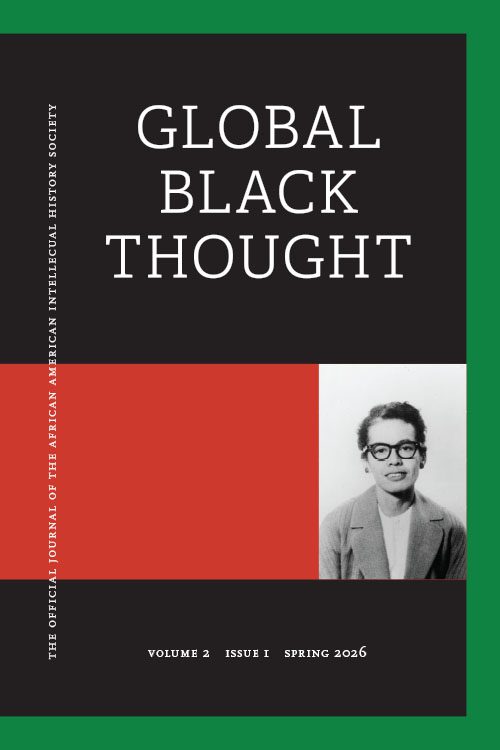
The essays in this special issue build on and further enrich this history. Tejai Beulah Howard’s essay, “Pauli Murray’s Prophetic Imagination: Brown v. Board, and the Struggle for Equal Rights in the United States,” uses a religious studies approach to consider the life and ideas of Murray, which offers a more nuanced interpretation of her intellectual contributions. Lacey P. Hunter and Hettie V. Williams illustrate how Mamie Phipps Clark was the pioneer behind the famed doll test that was used as evidence in the Brown case in their essay, “There Were No ‘Idiot Savants’ in the Group: Mamie Phipps Clark and the Brown v. Board Decision.” Although her contributions largely have been overshadowed by her more recognizable husband Kenneth B. Clark, Hunter and Williams note that Mamie Phipps Clark was the one who conceived of the doll test as a method to better understand Black children, race, and the formation of racial identity in child development. She was, as they explain, a formidable scholar and a woman of ideas who was deeply concerned with how race and gender identity shaped individual experiences.
Rachel Devlin also explores these themes in her essay, “Girls on the Front Line: Malaika Favorite, Gender, and School Desegregation after Brown v. Board of Education.” Devlin’s work is critical to understanding the role young women and girls played in the years leading up to the Brown case and in its aftermath. Historical surveys of Brown illuminate the fact that there was harsh, violent resistance to the integration of public schools, and segregation persisted well beyond 1954. That said, Black women and girls have also continued their fight for equity in education by continuing to be on the “front lines.”
This notion of a longue durée of Brown—or an extended narrative of the fight for desegregation—is advanced further in Amato Nocera and Alexander Hyres’s essay, “Rebel with a Cause: Ruby J. Gainer, Black Educators, and the Long-Brown Era.” Their essay is situated within studies on the history of education and the African American experience. With their focus on Ruby Gainer, a public schoolteacher and pay equity activist in several southern states including Alabama and Florida during the height of the civil rights movement, the authors are in conversation with several new works on Black educators in the struggle for Black equality. These works include Katherine Mellen Charron’s Freedom’s Teacher: The Life of Septima Clark (2012) and Fugitive Pedagogy: Carter G. Woodson and the Art of Black Teaching (2021) by Jarvis R. Givens.
The essays included in this special issue of Global Black Thought offer a glimpse into new directions for the study of the Black freedom struggle and the Black intellectual tradition. They emphasize the significance of centering Black women and girls’ ideas as well as exploring gender identity and education in the long Black freedom struggle. The Black freedom struggle marches forward with each generation, and we as scholars must strive to capture the intellectual work done by Black thinkers from all walks of life to understand the ideas and ideologies that have shaped the movement.
The focus on the ideas and political activism of more recognizable women such as Motley, Murray, and Clark alongside lesser-known individuals such as Favorite and Gainer helps us understand the myriad ways Black women and girls have shaped the movement while providing some of the intellectual building blocks for one of the most significant U.S. Supreme Court decisions to date. Telling their stories demonstrates the intersections of civil rights, education, women’s rights, and Black intellectual history.
Copyright © AAIHS. May not be reprinted without permission.