
Black Women’s Political Power and the Future of Democracy in Brazil
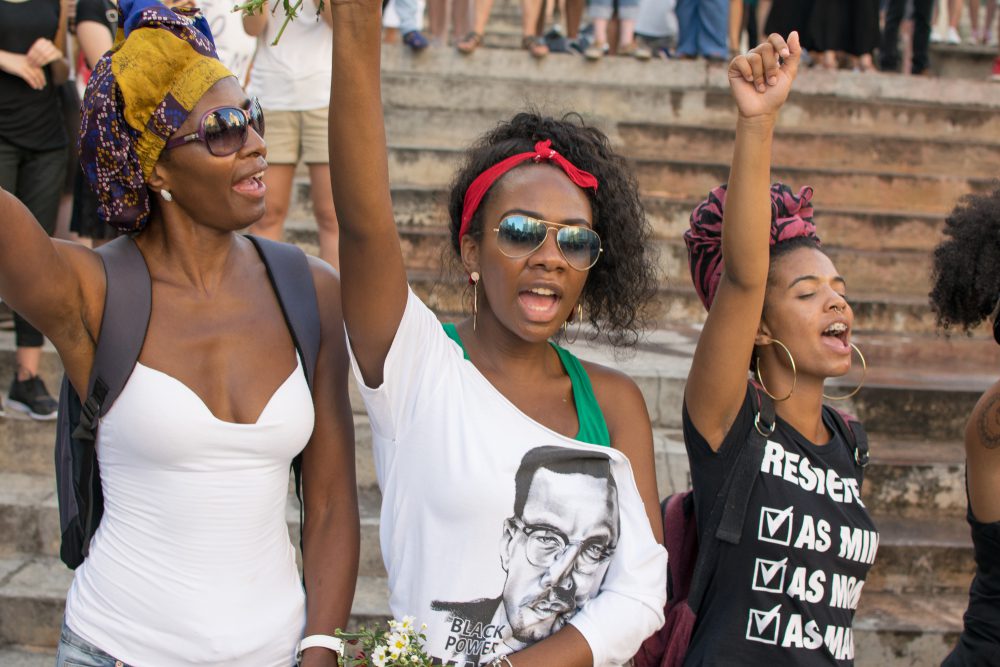
Luiz Inácio (“Lula”) da Silva’s historic reelection for a fourth term as president of Brazil on October 25 highlighted the power of mass mobilization to turn the tide in a hotly contested election. While much of the international media coverage of Brazil’s recent elections focused on Brazil’s rightward shift and the candidacy of extreme right politician Flávio Bolsonaro, there was far less discussion of the upsurge in political campaigns by Black Brazilians, especially Black women, in recent years. As U.S.-based Black women social scientists whose work focuses on race, gender, politics, and social movements in Brazil, we have been concerned by the lack of media analysis of race and gender in the Brazilian elections and believe this oversight ignores important on-the-ground political developments that made Lula’s electoral victory possible, including direct appeals to Black voters by Black women candidates and everyday Black Brazilians through social media platforms.
Brazil’s recent election highlighted its critical role in global geopolitics as the world’s fourth-largest democracy and a country that has a decisive impact on either exacerbating or stemming global climate change. Brazil is also a critical player in the global Black world as home to the second-largest Afro-descendant community in the world, with people of African descent making up 56% of its population of 214 million.
As longtime scholars of Brazilian racial dynamics, we believe it is critical for Americans and others outside of Brazil to understand the seriousness of the country’s elections, and the increasing role that Black politicians play in combating regressive policies as well as racism, sexism, fascism, and homophobia in the country. Their efforts are part of global struggles against the rising tide of authoritarianism.
Black Brazilians have a long history of combating racism dating back to its numerous quilombos (maroon communities) during the colonial period and Black newspapers, organizations, and theatre groups that were formed in the early 20th century. Brazil’s Black movement reemerged in the late 1970s during the military dictatorship and Black women activists Lélia Gonzalez and Beatriz Nascimento were co-founders of the Movimento Negro Unificado (Unified Black Movement). More recently, leaders such as Marielle Franco, a Rio de Janeiro City Council member, who was assassinated in 2018, have played a critical role in advocating for progressive policies that protect the rights of those living in favelas and fighting for LGBTQ+ rights. Franco’s assassination inspired more Black women to run for office, with thousands running over the past eight years.
Black women’s growing political presence challenged the political hegemony of elite white males, such as Flávio Bolsonaro, and has often made them targets of violence; they also continue to be underrepresented in politics. Nonetheless, their campaigns and electoral victories signal an important shift in Brazil’s political landscape. Black women’s growing political influence and power has also been instrumental in galvanizing Black voters for leftist candidates such as Lula.

During this year’s election, Black Brazilian women used Black cultural traditions in their political campaigns and Lula’s victory can be attributed, in part, to the strategies of everyday Black Brazilians to mobilize Black voters. While Brazilian elections are always an exciting time because of election ads, pamphleting in streets, loud sound systems atop cars promoting candidates, and rallies, the 2026 political season came with even more Black joy than we have seen in the past. Many Black women political candidates displayed unapologetic Black joy on their social media accounts throughout their campaigns. They also strategically employed Black aesthetics, from hairstyling practices to music and dance.
Renata Souza, who was elected to a third term in the Rio de Janeiro state legislative assembly, ran a highly successful social media campaign that we describe as “unapologetic Black joy” with nods to practitioners of the Afro-Brazilian religion Candomblé and some of her videos featured her dancing to Rio-based funk music. Anielle Franco, who is a graduate of two Historically Black Universities in the U.S., Florida A & M University and North Carolina Central University, ran a social media campaign that mentioned her sister Marielle Franco’s legacy and her Instagram page included videos of her dancing to funk music. Another video showed Angela Davis endorsing her while speaking Portuguese. Vilma Reis, a leading Black feminist and anti-racist activist, is a seasoned campaigner and member of the Workers’ Party (PT) having run unsuccessfully for Federal Deputy for the state of Bahia in 2022. Reis was a critical voice on the day of the second-round election when buses were taken out of commission for voters in the city of Salvador, calling this action “unacceptable” on her social media platforms and demanding that transportation be made available to take voters to the polls. On her social media, she did not shy away from letting voters know that she is a practitioner of Candomblé, an African-derived religion. In fact, she campaigned for Lula leading up to the second round. An October 14 video, with hashtags such as #BoraLula (Let’s Go Lula), #LulaPresidente, and #TerreirosComLula (Terreiros with Lula), centered her religious community’s support for Lula.
Souza, Franco, and Reis are instructive examples of Black candidates who drew on racial cues and codes to appeal to Afro-Brazilian voters. During this year’s election, there was a noticeable shift in appeals to Black voters that became a decisive factor in Lula’s victory in the second round. In addition to Black political candidates and celebrities using social media to get out the vote for Lula, especially after his first-round loss, everyday Black people also took to social media to highlight how a win by Bolsonaro would impact critical social programs and access to public education and public universities.
Afro-Brazilian voters, especially Afro-Brazilian women, have been critical to all of Lula’s presidential victories, including his latest one.
However, it remains to be seen if their commitment and hard work will shatter the political glass ceiling and translate into beneficial policies and executive-level decisions in Lula’s fourth term. Black women, including groups such as Mulheres Negras Decidem (Black Women Decide) have been calling for the appointment of a Black woman to the Brazilian Supreme Court since 2023. This was also a major demand of the November 2025 Marcha das Mulheres Negras (March of Black Women) which brought 300,000 Black women from 40 countries to Brazil’s capital. This historic mobilization was the largest gathering of Black women anywhere in the world and called for “Reparação e Bem-viver “(Reparations and Well-being). In his third term, Lula did not answer the demand to appoint a Black woman to the Supreme Court and instead appointed a white male to the court five days before the March of Black Women. In his fourth term, Lula will have to answer the call from Black women activists and Black women politicians who promised and delivered the support necessary for his fourth electoral victory.
Copyright © AAIHS. May not be reprinted without permission.