
Black Women and the Power of Learning: An Interview with John Frederick Bell
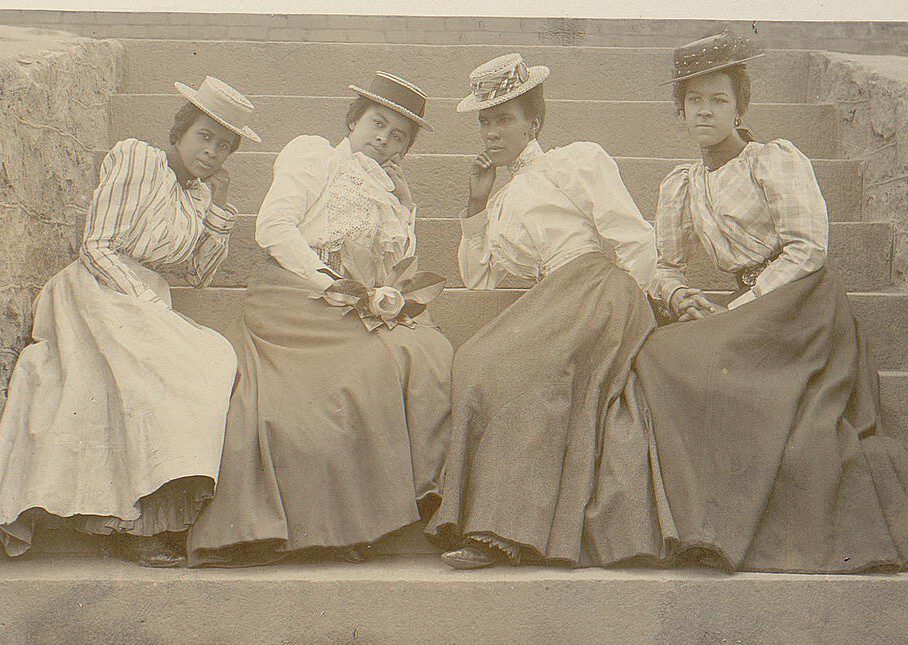
In today’s post, Mickell Carter, an editorial assistant at Global Black Thought (the official journal of AAIHS), interviews John Frederick Bell about his article, “Speaking of Learning: Education, Epistemology, and the Discourse of the Female Talented Tenth,” which examines the role of education as a heuristic in late 19th-century Black feminist thought as expressed by the six Black women speakers at the 1893 World’s Congress of Representative Women. Against the backdrop of Jim Crow’s rise, these leading members of the “Female Talented Tenth” used ideas and experiences of learning to define their character, demonstrate their potential, and articulate their visions of reform. While prior scholarship emphasizes education as a source of Black women’s empowerment, this article considers the tension between liberal education and racial retrenchment and analyzes how the Female Talented Tenth navigated this conflict in their discourse.
John Frederick Bell is a social and cultural historian of the United States specializing in race, education, and the Black freedom struggle. His book, Degrees of Equality: Abolitionist College and the Politics of Race (LSU Press, 2022), analyzes the first large-scale experiments in interracial higher education from the student perspective to explain why these once-inclusive institutions ultimately succumbed to racial prejudice. At Assumption, he mentors undergraduates through the Honors Program, the Secondary Education Teaching Practicum, and the SOPHIA Program. He is a frequent collaborator with the Division for Student Success on initiatives for BIPOC and first-generation students thriving. He serves as the university’s representative to the American Studies Committee of the American Antiquarian Society. From 2026 to 2029, he will serve as the University’s d’Alzon Chair for Mission & Identity.
Mickell Carter (MC): Your article focuses on the Female Talented Tenth, particularly the women who participated in the 1893 World’s Congress of Representative Women (WCRW) and how they understood the interconnections between education and liberation. Could you talk about what led you to this research and how the project developed from its origins as a paper that you presented at the 2025 AAIHS conference into this article?
John Frederick Bell (JFB): I learned about Black women’s participation in the WCRW while researching my book, Degrees of Equality: Abolitionist Colleges and the Politics of Race (LSU Press, 2022). Three of the 1893 speakers—Anna Julia Cooper, Fanny Jackson Coppin, and Sarah Woodson Early—were alumnae of Oberlin College, one of the interracial institutions I wrote about. When I learned that they shared the WCRW stage with other luminaries like Frances Ellen Watkins Harper, I couldn’t wait to read the Congress proceedings. When I did, I was struck by how prevalent the theme of education was in the Black speakers’ rhetoric. The AAIHS conference paper gave me a chance to test out arguments about the Female Talented Tenth’s ideas of learning and liberation that I later refined for this article.
MC: You note that while prior scholarship has recognized the relationship between education, teaching, and freedom, it has rarely considered education as “a heuristic in Black feminist discourse.” Could you expound on this? What does examining the speeches of the Female Talented Tenth at the WCRW reveal about their epistemology of reform and how Black women understood themselves and the world?
JFB: Part of what distinguished the Female Talented Tenth in their own time was their scholastic achievements as Black women. Historians have written about how education qualified them to become advocates for racial and gender equality, but few have considered how their learning informed the discourse of their activism. Yes, these women learned to read, write, and speak proficiently, but education gave them more than just skills. I am arguing that the experience of learning became their epistemology of reform—their formula for knowing and changing the world. Getting educated affirmed their worth as Black women, women, and human beings, giving them a knowledge of real human flourishing. As they made the case for equal recognition and opportunity, they made learning a heuristic of their rhetoric. It was their primary means of measuring their progress to date, realizing their own and others’ capacity for transformation, and charting the path toward justice for all. They cited their pursuit of knowledge as evidence of their character and a source of their solidarity. If education could unite and liberate Black women, it could do the same for Black and white women and, eventually, men and women of both races.
MC: You explained that education both empowered and presented a dilemma for the Female Talented Tenth. In what ways did these women navigate the tension between their faith in education as a liberatory pathway and the realities they faced?
JFB: Liberal education is designed to outfit a person for freedom and citizenship. That’s why the Female Talented Tenth—and so many Black activists before and after them—embraced and championed it. But what does it mean to pursue liberal education in an illiberal society? It was discouraging if not disillusioning when the politics of Jim Crow undermined their pedagogy. The Black speakers at the WCRW knew discrimination firsthand, and they appealed to the mostly white female audience to empathize with their struggle as fellow educated women. Black women also stood up for each other and drew strength from the internal rewards of education—communion with great ideas of history, with the wonders of creation, and ultimately with their Creator. Witnessing their own and each other’s intellectual and spiritual growth gave them hope that education might broaden whites’ horizons, too, and someday make them unlearn their racism.
MC: What does examining the ideas of these women reveal about Black feminist thought and Black women’s intellectual history more broadly?
JFB: Brittany Cooper’s concept of “embodied discourse” has drawn attention to the ways corporeality and lived experience influenced turn-of-the-century Black feminist thought. As she and other scholars like Chloe Celeste Porche and Sara C. Vanderhaagen have demonstrated, theorization of the Black female body was a major feature of the Female Talented Tenth’s ontology and epistemology. This article has shown how ideas and experiences of education were another crucial contributor to Black women’s understanding of themselves and the world. Education provided both evidence and inspiration for their feminism. Scholastic achievement gave Black women proof of their ability to learn under exceptionally adverse material circumstances. But learning also transported their spirits beyond those circumstances by revealing their God-given powers to reason, wonder, and grow. Education affirmed their humanity and everyone else’s. They knew the intrinsic freedom they experienced through study was possible for all and could lead to the greater liberation of society. Individual self-realization sustained their hope for broader social reform, even when that transformation did not immediately materialize. Learning enabled a rhetorical dialectic of experience and imagination, history and possibility. It made the discourse of the Female Talented Tenth at once grounded and visionary. To read the WCRW speeches today is to hear both testimony and prophecy—and to get schooled twice over.
Copyright © AAIHS. May not be reprinted without permission.
Ana Julia Cooper and her cohorts were quite remarkable!!! They laid a firm foundation for me personally as I wade in the waters of clinical psychology to make it relevant and accessible to Black women. Thank you for bringing this 19th century Women’s conference into 21st century thought!