
Ruby J. Gainer, Black Educators, and the Long-Brown Era

In today’s post, Ashley Everson, assistant professor of African American and Africana Studies at the University of Maryland, College Park and a managing editor of Global Black Thought, interviews Professors Amato Nocera and Alexander Hyres about their new article, “Rebel with a Cause: Ruby J. Gainer, Black Educators, and the Long-Brown Era.” The article is featured in Volume 2, Issue 1 (Spring 2026), a special issue on “Black Women and the Brown Decision” (edited by Hettie V. Williams, Professor of History at Monmouth University). This article introduces the concept of the “Long-Brown” through a careful study of the life and work of Ruby J. Gainer, a Black educator in Alabama and Florida whose career spanned between the 1930s and 1980s.
Amato Nocera is an assistant professor and historian of education at North Carolina State University. He is the author of Constructing a Black Curriculum: Race, Representation, and the Politics of Knowledge, 1890–1945 (Rutgers University Press, 2026). His co-author, Alexander Hyres, is an assistant professor in the history of US education at the University of Utah. He is the author of Protest and Pedagogy: Charlottesville’s Black Freedom Struggle and the Making of the American High School (University of Georgia Press, 2026).
Ashley Everson (AE): You introduce the concept of a “Long Brown era” to “expand the temporal and conceptual boundaries of the case.” How does this expansion deepen our understanding of the nuanced and evolving legacy of Brown v. Board of Education?
Amato Nocera and Alexander Hyres (AN & AH): Our “Long-Brown Era” framework emerged from a question we kept coming back to. We wanted to provide a history of Black teachers and Brown, but we found ourselves regularly struggling with the question: “What counts as Brown?” That may seem like a strange question, but the historiography of Brown v. Board of Education has always recognized it as more than a singular legal case. Still, if Brown’s is bigger than just one case, it is not always clear what its boundaries and scope are. We found that the historiography tended to implicitly equate Brown with decades of case law and civil rights advocacy led by the NAACP. We saw Black women—teachers—more clearly in the historical picture when Brown was recognized beyond its legal history, as an evolving context that shaped and was shaped by the people living through it. By drawing on Jacquelyn Hall’s notion of a “long Civil Rights Movement,” we positioned Brown not as a single inflection point but as a context that Black teachers navigated with remarkable agency and creativity throughout the latter of the twentieth century.
Our conceptualization of Brown in this piece centers on contingency and agency. Ruby Gainer’s story resists the deterministic quality that can creep into narratives focused on Black teachers or Brown or both. The Long-Brown Era helps us see how teachers like Gainer were making strategic decisions, building coalitions, and contesting educational inequality well before 1954 and long after. The framework, we hope, opens space for more of these stories to be told.
AE: To what extent do you situate Gainer’s labor and salary-equalization activism within the tradition of what Jarvis Givens terms “fugitive pedagogy,” as exemplified in Carter G. Woodson’s pedagogical approach?
AN & AH: Givens’s concept of “fugitive pedagogy” is enormously useful for understanding Black teachers’ pedagogical choices and their efforts to cultivate racial consciousness under the constraints of Jim Crow. Gainer certainly operated in that tradition and was deeply committed to Black students’ intellectual and political development.
That said, we want to be careful not to flatten the distinctions between what Gainer was doing and what Givens traces through Woodson’s movement. Fugitive pedagogy, as Givens develops it, operates largely through concealment. What is striking about Gainer is how overt her challenges to white authority were. She filed lawsuits, organized unions, gave public speeches, and even ran for city council. Her activism moved beyond the classroom and into open confrontation. The public nature of Gainer’s activism allows us to chart how she engaged with national civil rights frameworks (e.g. salary equalization), but also adapted them to her own context and vision of educational justice.
AE: You argue that Gainer’s efforts to organize both white and Black teachers’ unions in Florida served as “a strategic means for building educators’ political power.” Did Gainer understand education as a liberatory profession? How did her vision for the future of teaching align with—or depart from—that of the “many Black women…[who viewed teaching] as an identity marker alongside other indicators of Black middle-class womanhood”?
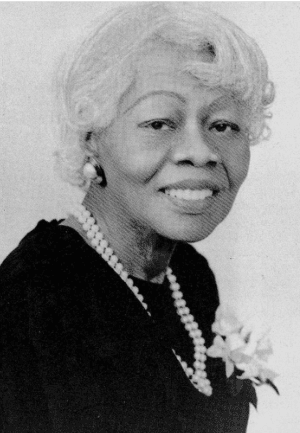
AN & AH: Gainer certainly understood education as a liberatory profession. She arrived at that understanding through a distinctly labor-oriented framework that set her apart from some of her peers. For many Black women educators, teaching’s liberatory potential was expressed through racial uplift, respectability, and the cultivation of students’ excellence in segregated classrooms and schools. That approach was powerful and produced a rich tradition in Black communities. Gainer shared a commitment to students’ dignity and achievement, but her primary vehicle for change focused on labor organizing rather than professional excellence.
Gainer’s focus on organizing led to some sharp departures from her peers. Perhaps the clearest example of that was her insistence on cross-racial organizing into the 1970s. At a moment when many Black educators were souring on integration—understandably, given what desegregation was costing Black communities—Gainer remained a committed integrationist, not out of naivety but because she had seen, in Alabama, what cross-racial solidarity in the labor movement could accomplish. Her advocacy for merging Black and white teachers’ associations reflected a genuine (and controversial) calculation. It also illuminates the real ideological and strategic diversity within the community of Black women educators, a diversity that the broader category of “middle-class Black womanhood” can sometimes obscure.
AE: Throughout the article, you reconstruct Gainer’s activism using local Black and white newspaper coverage. How did you craft such a nuanced and comprehensive account from sources that may be ideologically or racially biased? How did you assess credibility and corroborate these materials?
AN & AH: This is actually a question we discussed quite a bit. Gainer does not have her own archival collection, and newspaper coverage accounted for a significant portion of the primary source material we used. It took us a while to become convinced that we could tell Gainer’s story relying so heavily on press coverage.
One of the sources that convinced us it was possible was the Birmingham World, a local newspaper run by Gainer’s brother, Emory O. Jackson. The World closely followed her equalization campaign in Alabama and was invaluable for recovering Gainer’s voice and the perspective of her community. Jackson’s coverage of her case also prompted a lot of Black press outlets to follow her story, including the Pittsburgh Courier and the Atlanta Daily World. These papers were explicitly committed to advancing Black civil rights. The white press presented more of an interpretive challenge. They were often openly hostile, even branding Gainer a “communist” as she challenged her dismissal from teaching in court. Still, when white newspapers covered Gainer’s firing through the lens of Cold War anti-communism, they were documenting a real tactic school officials used to discipline Black activism.
In truth, white and Black newspapers often corroborated each other with the basic outline of events, even if their tone and emphasis were drastically different. We also used a variety of records beyond newspapers—court records, union press releases, NEA proceedings, and secondary scholarship by historians like Tondra Loder-Jackson that helped us triangulate and contextualize the newspaper accounts. Ultimately, we approached all of our sources as partial records that were produced by particular people, with particular interests, at particular moments. Read carefully, they tell a larger story that we found compelling and illustrative of the Long Brown.
Copyright © AAIHS. May not be reprinted without permission.
Your “Long Brown Era” framework really broadens Brown beyond a legal moment by focusing on the power and activism of Black teachers over the years. Gainer’s story makes me think about educational justice in a new and interesting way.